

Category: Science and the Media
Patients blinded by stem cell therapy: an update
An update on the tragic results of unproven stem cell treatments to treat macular degeneration.
Deception by omission: Del Bigtree’s ICAN calls the studies licensing MMR into question
Del Bigtree's antivaccine group Informed Consent Action Network issued a press release questioning the data used to license the MMR vaccine, with Bigtree claiming on a recent episode of his vlog Highwire that it causes significant GI issues that the FDA "covered up." As usual, Bigtree is deceiving by omission.
Great Courses: Skeptic’s Guide to Health, Medicine, and the Media
Dr. Roy Benaroch's course offers a toolkit of six questions we can use to evaluate the truth behind the often misleading media reports on health topics. It is a valuable companion to the Science-Based Medicine blog.

An HBO Documentary about the Theranos Fraud Raises Concerns
Elizabeth Holmes founded Theranos to develop a device that could do 200 tests on a single drop of blood in a minute. She lied; it failed; she is being tried for fraud and conspiracy. The HBO documentary The Inventor tells the story but has some flaws. We can learn lessons from what happened.

Shots Heard: When the antivaccine movement swarms and harasses on social media, what can we do?
Of late, antivaxers active on social media have been ramping up their attacks on their perceived enemies, up to and including attacking even mothers who have lost children to vaccine-preventable disease. A new study looks at the characteristics of this group, even as two doctors form a group to help those who are victims of antivaccine harassment on social media, Shots Heard...

Combatting dangerous quackery and antivaccine misinformation on streaming services and social media
Last week, Amazon began removing antivaccine videos from Amazon Prime. Last month, YouTube announced that it was demonetizing antivaccine videos, and Facebook stated that it would be taking action to de-emphasize antivaccine pages in its searched. These are all good first tentative steps, but the problem of quackery on streaming platforms and social media goes way beyond just antivaccine content. Making it...

Peter Gøtzsche and antivaxers: Should a science advocate ever speak at an antivaccine conference?
Last week, I wrote about how evidence-based medicine icon Peter Gøtzsche was slated to speak at an antivaccine conference. This week, I now know why he agreed to appear. In part, he thought he could change antivaxer minds. This leads me to ask: Is it ever a good idea for a science advocate to speak at a pseudoscience conference?
The strange saga of Peter Gøtzsche and Physicians for Informed Consent
Recently, it was noted that Peter Gøtzsche, formerly of Cochrane Nordic, was featured on the speaker list for an antivaccine quackfest organized by the antivaccine group Physicians for Informed Consent, along with Robert F. Kennedy, Jr., Toni Bark, and Marry Holland. Two days later, he announced that he would not be speaking there. So what happened? And what is Physicians for Informed...
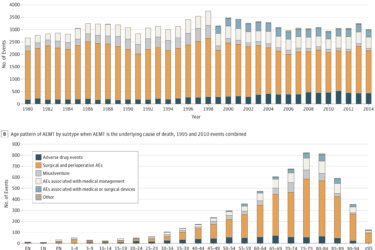
Are medical errors really the third most common cause of death in the U.S.? (2019 edition)
The claim that medical errors are the third leading cause of death in the US has always rested on very shaky evidence; yet it's become common wisdom that is cited as though everyone accepts it. But if estimates of 250,000 to 400,000 deaths due to medical error are way too high, what is the real number? A study published last month suggests...

Misleading Ad for Apeaz
An ad for Apeaz in Discover Magazine is misleading. Its active ingredient may provide some temporary relief of pain, but the claims in the ad are overblown. It is not a new blockbuster drug or an anesthetic.