


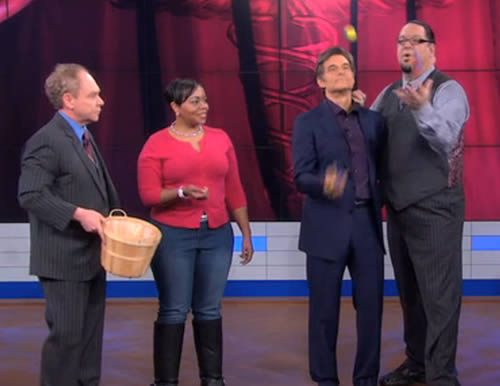
An open letter to Penn & Teller about their appearance on The Dr. Oz Show
Dear Penn & Teller, I really don’t want to say this, but I feel obligated to. I’m afraid you screwed up. Big time. (Of course, if this weren’t a generally family-friendly blog, where we rarely go beyond PG-13 language, I’d use a term more like one that Penn would use to describe a massive fail, which, as you might guess, also...
Honey Boo Boo
My son has been coughing for several weeks, and the cough will probably persist for another 2 or 3 weeks. Coughs last a long time. Patients think a cough will go away in less than a week but in reality they are likely to last several weeks. Coughs are a pain for the patient and an annoyance for the people around them....
Fighting Back
As I hope I demonstrated in Legislative Alchemy: Naturopathy 2013, below, licensing “naturopathic doctors,” especially as primary care physicians, is a bad idea. Unfortunately, the only people usually interested in opposing their licensing efforts are medical doctors and their organizations. Of course, this allows naturopaths to pretend they are the victims of the evil, Big Pharma-controlled medical-industrial complex which kills and maims vast...
Legislative Alchemy: Naturopathy 2013
A fresh season of state legislative sessions is upon us and with it comes the ubiquitous attempts by purveyors of so called “complementary and alternative medicine” (or “CAM”) to join the health care provider fraternity. Via the magic of legislative alchemy, state legislatures transform pseudoscientific diagnoses (e.g., “chronic yeast overgrowth”) and treatments (e.g., homeopathy) into faux, but legal, health care. Once the...
Dynamic Neural Retraining
Snake oil often resides on the apparent cutting edge of medical advance. This is a marketing strategy – exploiting the media hype that often precedes actual scientific advances (even ones that don’t eventually pan out). The slogan of this approach could be, “Turning tomorrow’s possible cures into today’s pseudoscientific snake oil.” The strategy works because, to the average person, the claims will...
Gender Differences and Why They Don’t Matter So Much
Several incidents have recently created divisions within the skeptical community. The latest one was over a casual comment Michael Shermer made in an online talk show. He was asked why the gender split in atheism was not 50/50, “as it should be.” He said he thought it probably was 50/50, and suggested that the perception of unequal numbers might be because attending...

Here we go again: A bill licensing naturopaths rears its ugly head in Michigan
The goal of organized naturopathy is to achieve licensure for naturopaths in all 50 states. Unfortunately, that means they have to come through Michigan, which is my state. This means the naturopaths, having failed to pass a licensure bill last year, are back to try again. They're a lot like the Terminator that way. They never, ever give up.
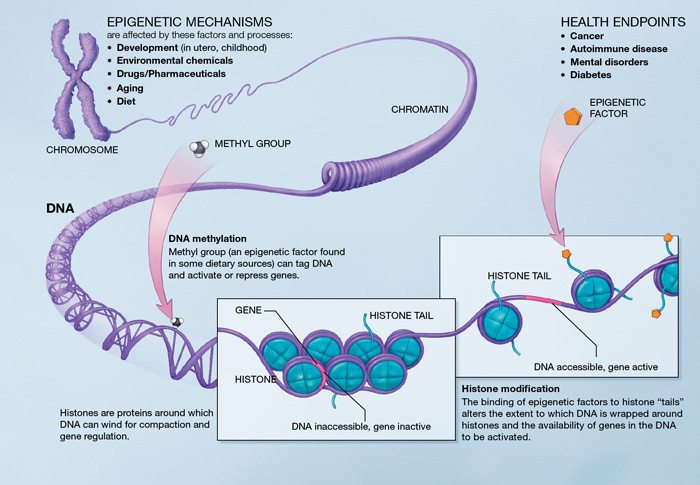
Epigenetics: It doesn’t mean what quacks think it means
Epigenetics. You keep using that word. I do not think it means what you think it means. I realize I overuse that little joke, but I can’t help but think that virtually every time I see advocates of so-called “complementary and alternative medicine” (CAM) or, as it’s known more commonly now, “integrative medicine” discussing epigenetics. All you have to do to view...
California Acupuncture Licensing: Sinking Lower in the Slime!
The sun shone down upon that putrescence, As if to roast it to a turn, And to give back a hundredfold to great Nature The elements she had combined… — Charles Baudelaire, The Carcase1 Trouble for the struggling California Acupuncture Board (Board) is far from being over. After being taken to task by the California Senate less than a year ago for...
Should you be “Eating Clean”?
Like many of you I’m interested in the science of good nutrition. In general, I’ve come to be pretty skeptical of the nutritional literature, as so many studies seem to follow the same trajectory that we see with drug studies: Trivial changes in non-relevant outcomes, a failure to consider the results in the context of the accumulated scientific evidence and often, significant...