


What Is Traditional Chinese Medicine?
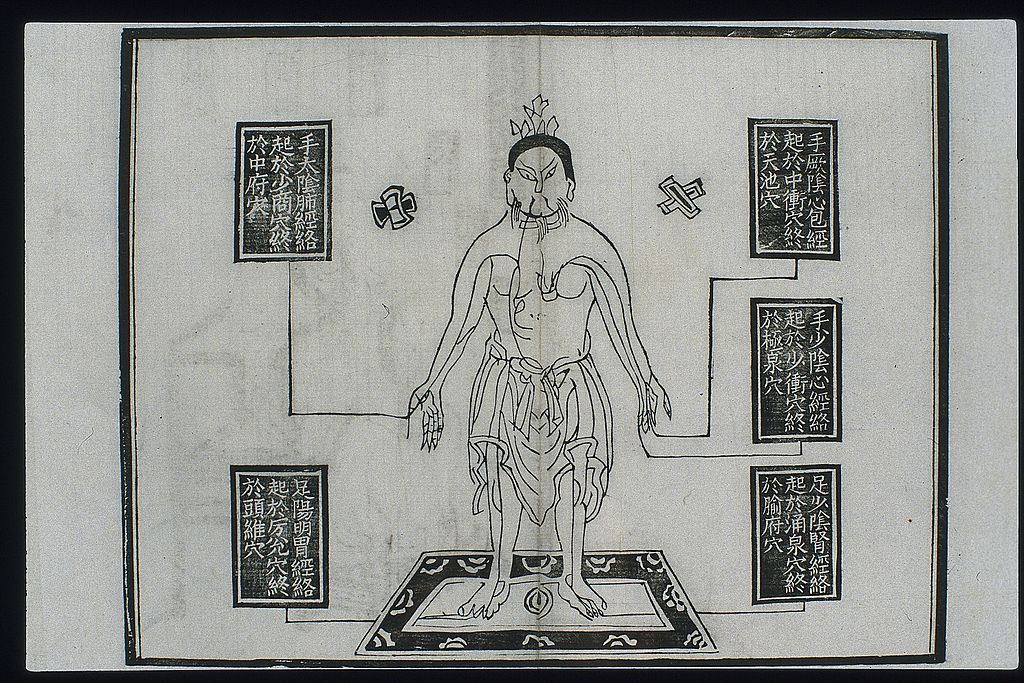
Traditional Chinese Medicine is not actual medicine, and should not be treated as such. It has more in common with Galen's theory of the four humors than anything a doctor would recognize today.
An Owner’s Manual for the Heart
In writing about science-based medicine, we give a lot of attention to medicine that is not based on good science. We use bad examples to show why science is important and how it is frequently misapplied, misinterpreted, misreported, or even wholly rejected. It’s a pleasure, for a change, to write about a straightforward example of the best of science-based medicine in action....
Legislative alchemy (briefly) revisited: Naturopathy in Vermont and colloidal silver
A couple of weeks ago, Jann Bellamy wrote about “legislative alchemy” in the new year, in which CAM mischief works its way into state legislatures. Specifically, she mentioned the case of legislators in Vermont trying to declare in law that naturopaths are primary care physicians, who can serve as a patient’s medical home without supervision by real doctors. Rosemary Jacobs, whose life...
Reassessing whether low energy electromagnetic fields can have clinically relevant biological effects
It is with some trepidation that I write this, given that I realize this post might lead to charges that I’ve allowed myself to become so open-minded that my brains fell out, but I think the issues raised by what I’m about to discuss will make our readers think a bit—and perhaps spark some conversation. Because I’m in a bit of a...
Podcast Interlude
I’m traveling this week, checking out pharmacy practice internationally, and looking for signs of science-based medicine. Instead of a post, here are the links to two podcasts I recently recorded that will be of interest to SBM readers. Sit back, press play, and enjoy. Point of Inquiry: Dispensing Skepticism I recently spoke with Karen Stollznow for the Point of Inquiry podcast. This...
Aspirin Risks and Benefits
A new review published in The BMJ once again opens the question of the risks vs benefits of daily aspirin as a prevention for heart attacks and strokes. The reviewers looked at nine randomized trials involving over 100,000 patients and found that aspirin is effective in reducing heart attacks and strokes, but also increases the risk of gastrointestinal bleeding and that in...
NIH Director Francis Collins doesn’t understand the problem with CAM
As the sole cancer surgeon among our stable of Science-Based Medicine (SBM) bloggers, I’m probably the most irritated at the infiltration of pseudoscience into academia (or, as we sometimes like to call it, quackademic medicine) in the realm of cancer. Part of the reason, of course, is that cancer is so common and that the consequences of adding pseudoscience to cancer therapy...
The New England Journal of Medicine Sinks a Bit Lower
I suppose it was bound to happen, but it still rankles. Here is the back cover of last week’s issue of the decreasingly prestigious New England Journal of Medicine: Here’s the front cover: It’s the 200th Anniversary issue, no less. Some might protest that ‘probiotics’—live bacteria of ‘good’ varieties, as far as the gut is concerned—aren’t all that implausible, and that...
Legislative Alchemy: The New Year
A new year brings new opportunities for practicing the magic of legislative alchemy, the process by which state legislatures transform implausible and unproven diagnostic methods and treatments into perfectly legal health care practices, such as naturopathy, chiropractic and acupuncture. Different states have different legislative calendars, but many begin a new session soon after the first of the year. This gives “complementary and...
The CDC Has Been Hollowed Out