

Category: Clinical Trials
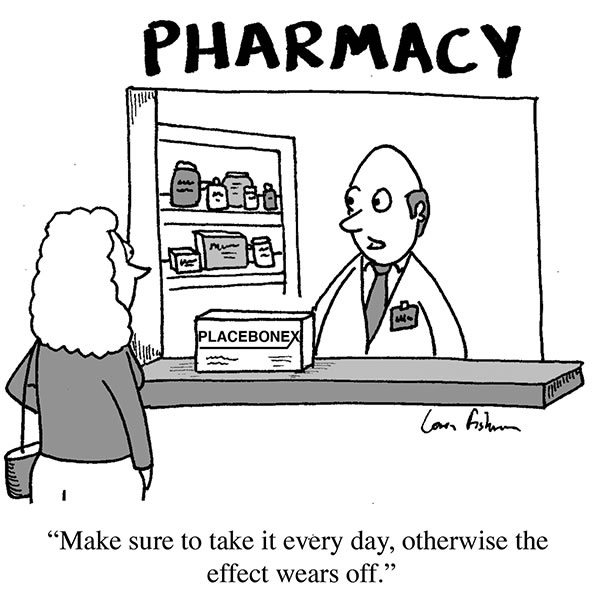
Behold the spin! What a new survey of placebo prescribing really tells us
One of the recurring topics here at SBM is the idea of the placebo: What it is, what it isn’t, and how it complicates our evaluation of the scientific evidence. One my earliest lessons after I started following this blog (I was a reader long before I was a writer) was that I didn’t understand placebos well enough to even describe them...
Burzynski: Cancer Is A Serious Business, Part 2: Like the first Burzynski movie, only more so?
Film producer Eric Merola seems to think that there is a conspiracy of skeptics (whom he calls The Skeptics) who are fanatically hell-bent on harassing his hero, Brave Maverick Doctor Stanislaw Burzynski. According to his latest film Burzynski: Cancer Is A Serious Business, Part 2 (henceforth referred to as Burzynski II, to distinguish it from part 1, to which I will refer...
Acupuncture and Allergic Rhinitis: Another Opportunity for Intellectual Sterility
You need to keep an open mind. A common suggestion offered to naysayers of nonsense. The usual retort concerns not letting one’s brain fall out. Evaluating SCAM’s is less about having an open mind and more about having standards, a conceptual framework that is used to interpret and analyze new information. One of the benefits of writing and reading topics covered by...
Dr. Stanislaw Burzynski’s cancer “success” stories update: Why is the release of the Burzynski sequel being delayed?
It’s no secret that I happen to be on several mailing lists of groups or doctors whose dedication to science is—shall we say?—questionable. Of course, the reason I join such mailing lists is to keep my finger on the pulse of pseudoscience, so to speak. Between such lists and strategically selected Google Alerts (the latter of which appear to be failing me...
Warts
As this is published I am finishing the last day of a 12 day stretch covering my partner while he is off trying to get MDRTB and typhoid fever. He is in India. I may have to autoclave him when he returns before I let him in the hospital. Double the work means double the fun, but free time goes down by...
Dr. Stanislaw Burzynski’s cancer “success” stories
The year 2012 was rung out and the year 2013 will be rung in by news that Eric Merola, propagandist for “brave maverick doctor” Stanislaw Burzynski who claims to have developed a cancer treatment far superior to current conventional science- and evidence-based cancer treatments, is releasing releasing a sequel to his wildly successful documentary (in the “alternative cancer” underground, that is) Burzynski...
Mouse Model of Sepsis Challenged
A recent study published in the Proceedings of the National Academy of Sciences calls into question the standard mouse model of sepsis, trauma, and infection. The research is an excellent example of how proper science investigates its own methods. Mouse and other animal models are essential to biomedical research. The goal is to find a specific animal model of a human disease...
Honey Boo Boo
My son has been coughing for several weeks, and the cough will probably persist for another 2 or 3 weeks. Coughs last a long time. Patients think a cough will go away in less than a week but in reality they are likely to last several weeks. Coughs are a pain for the patient and an annoyance for the people around them....
Is acupuncture as effective as antidepressants? Part 2. Blinding readers who try to get an answer
This is the second blog post about a recent PLOS One review claiming that alternative therapies such as acupuncture are as effective as antidepressants and psychotherapy for depression. The article gives a message to depressed consumers that they should consider alternative therapies as a treatment option because they are just as effective as conventional treatments. It gives promoters of alternative therapies a...
One Flu Into the Cuckoo’s Nest
“I don’t seem able to get it straight in my mind….” ― Ken Kesey, One Flew Over the Cuckoo’s Nest Influenza is going gangbusters at the moment. I like going to Google Flu trends as well as the CDC flu site to see what flu is doing. Using Google searches as a surrogate for infections is an interesting technique that public health...