

Category: Basic Science
Epigenetics: It doesn’t mean what quacks think it means
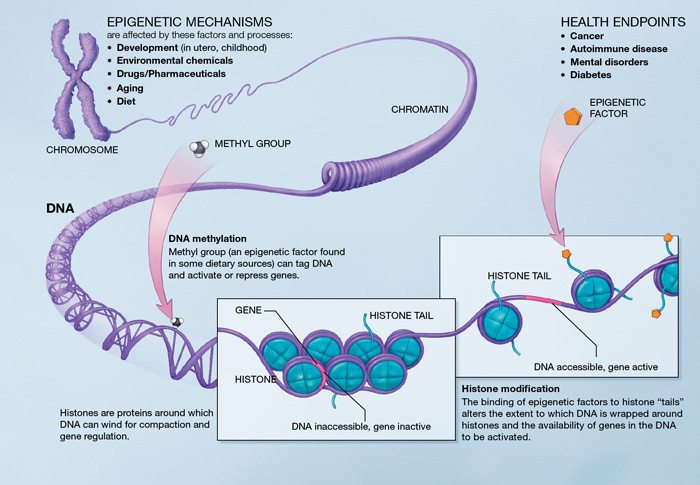
Epigenetics. You keep using that word. I do not think it means what you think it means. I realize I overuse that little joke, but I can’t help but think that virtually every time I see advocates of so-called “complementary and alternative medicine” (CAM) or, as it’s known more commonly now, “integrative medicine” discussing epigenetics. All you have to do to view...
Closing out 2012 with a bit of fun: Do you want some quantum with that pseudoscience?
today is the last day of 2012. As I contemplated what I’d write for my last post of 2012, I wondered what to do. Should I do a “year in review” sort of post? Naahh. Too trite and too much work. Should I just do what I normally do? There are, after all, many topics that are out there, some of them...
780.6. What is a fever?
You can tell what a doctor does for a living by the ICD-9 codes they have memorized. There is an ICD-9 code for nearly every medical condition. Weightlessness is 994.9. Must be there for NASA, I have yet to see a weightless patient. Decapitation by guillotine is E978. There, I suppose, in case Marat returns from the dead. There is an ICD-9...
A truly homeopathic defense of homeopathy
I realize that I’ve said it many times before, but it bears repeating. Homeopathy is the perfect quackery. The reason that homeopathy is so perfect as a form of quackery is because it is quite literally nothing. On second thought, I suppose that it’s not exactly nothing. It is, after all, water or whatever other diluent that homeopaths use (usually ethanol). However,...

The NIH funding process according to John Ioannidis: “Conformity” and “mediocrity”?
John Ioannidis published a paper that concluded that the NIH study section process prioritizes "safe" science and "conformity." Is he correct, or is this an exaggeration that uses a view of science that "brave mavericks" advance science far more rapidly than teams collaborating to make incremental progress?
Getting NCCAM’s money’s worth: Some results of NCCAM-funded studies of homeopathy
As hard as it is to believe, the Science-Based Medicine blog that you’re so eagerly reading is fast approaching its fifth anniversary of existence. The very first post here was a statement of purpose by Steve Novella on January 1, 2008, and my very first post was a somewhat rambling introduction that in retrospect is mildly embarrassing to me. It is what...
Thumbthing Worth Reading
I intended to read Sam Kean’s new book The Violinist’s Thumb: And Other Lost Tales of Love, War, and Genius as Written by our Genetic Code just for fun. I was expecting a miscellany of trivia loosely gathered around the theme of DNA. But I found something much more worthwhile that I thought merited a book review to bring it to the attention...
Mouse “avatars”: New predictors of response to chemotherapy?
Over the years, I’ve written a lot about “personalized medicine, mainly in the context of how the breakthroughs in genomic medicine and data pouring in from the Cancer Genome Atlas is providing the raw information necessary for developing truly personalized cancer therapy. The problem, of course, is analyzing it and figuring out how to apply it. Another problem, of course, is developing...
Is shameless self-promotion of your science a good idea?
As part of my ongoing effort to make sure that I never run out of blogging material, I subscribe to a number of quack e-mail newsletters. In fact, sometimes I think I’ve probably overdone it. Every day, I get several notices and pleas from various wretched hives of scum and quackery, such as NaturalNews.com, Mercola.com, and various antivaccine websites. I think of...
Low Level Lasers: N-Rays in action.
I do not want to get all angsty and omphaloskeptic, but I have been thinking more of late about the purpose of the blog and my role in it. Blogs,and the people who write them, are ephemeral. It takes a unique personality and commitment to churn out these essays and commit them to the ether. Especially since Michelson and Morley. I have never...