

Category: Science and Medicine

Shilling for traditional Chinese medicine: Nature leaves its readers a lump of coal before Christmas
I’ve subscribed to Nature for many years now, even though I don’t always read it. Nature is one of the oldest and most respected scientific journals around. It’s been around since 1869 and is said to be the world’s most cited journal. What makes Nature unusual these days is that it’s one of the last of the remaining general science journals and...
Hypothyroidism: The facts, the controversies, and the pseudoscience
As glands go, we don’t give the butterfly-shaped thyroid that straddles our trachea too much thought — until it stops working properly. The thyroid is a bit like your home’s thermostat: turn it high, and you’re hyperthyroid: heat intolerant, a high heart rate, and maybe some diarrhea. Turn it down, and you’re hypothyroid: cold, tired, constipated, and possibly even depressed. Both conditions...
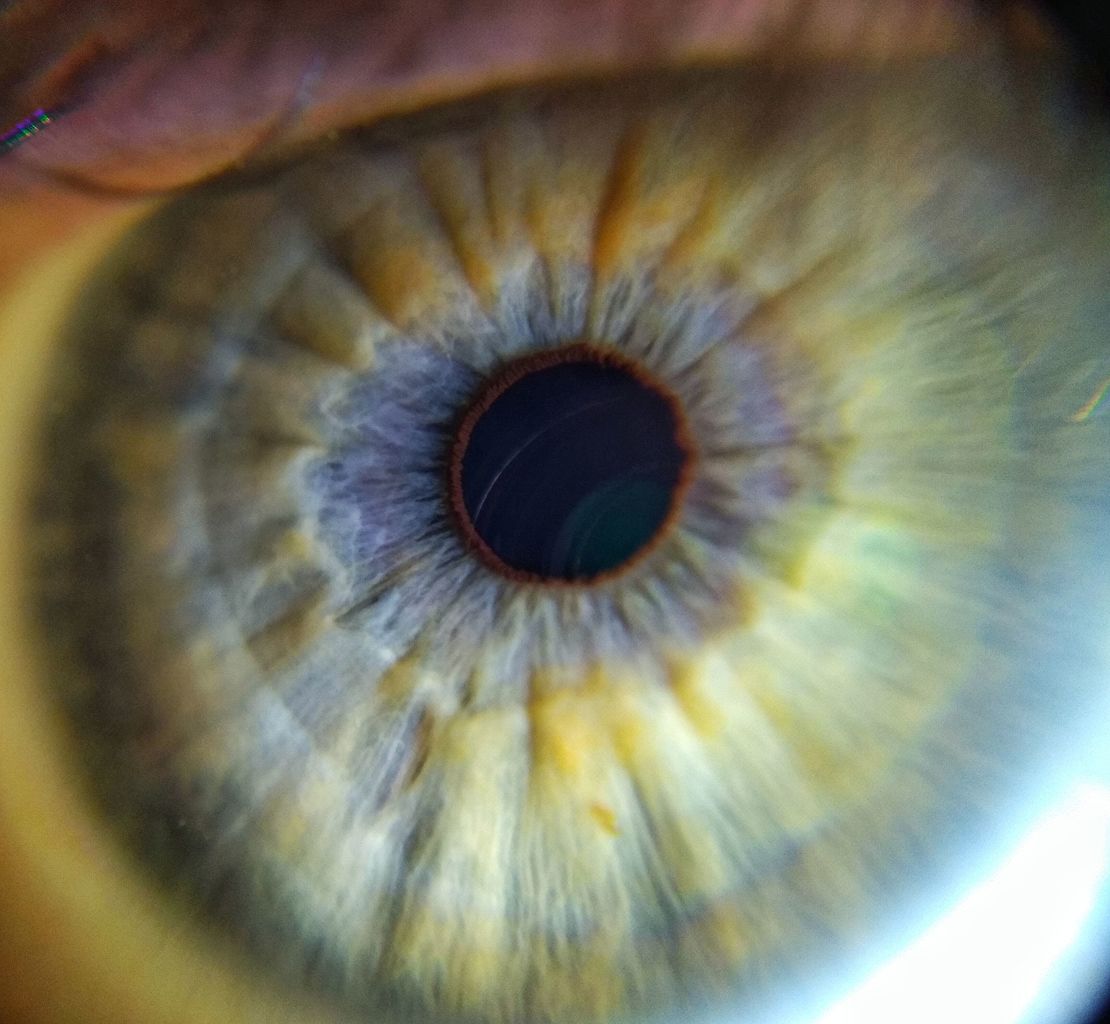
Iridology
Iridology claims that it can diagnose diseases through a careful examination of the iris. Unsurprisingly, there is no proof for this, and when tested it fails spectacularly.
A Christmas Card from the SkepDoc
The holiday season is upon us. As a bit of a holiday from science-based writing, I thought I would offer some thoughts inspired by the season and not supported by any scientific evidence. One of my friends refers to Christmas as “The Feast of St. Dyspepsia.” Holidays are indeed an occasion for over-indulging. People change their routine: they have time off work,...
The compassion gambit
I’ve spent the last three weeks writing about a “brave maverick doctor” by the name of Stanislaw Burzynski who claims that he can cure cancers that regular oncologists cannot. He uses a combination of what he calls “antineoplastons” (which, it turns out, are more or less than the active metabolites of an orphan drug known as sodium phenylbutyrate) plus a very expensive...
Alas poor Craniosacral. A SCAM of infinite jest, of most excellent fancy.
It is hard to Sokalize alternative medicine. The closest has been buttock reflexology/acupuncture, but that is a tame example. Given the propensity for projections of the human body to appear on the iris, hand, foot, tongue, and ear, postulating a similar pattern on the buttocks are simple variations on a common SCAM (Supplements, Complementary and Alternative Medicine) theme. The buttocks? Not really...
Defending CAM with Bad Logic and Bad Data
At SBM our mission is to promote the highest standards of science in medicine, and to explore exactly what that means, both in the specific and the general. We do spend a lot of space criticizing so-called CAM (complementary and alternative medicine) because it represents a semi-organized attempt to reduce or even eliminate the science-based standard of care, and to sow confusion...
Integrative Medicine: “Patient-Centered Care” is the new Medical Paternalism
Integrative Pitchmen Several of us have written about how contemporary quacks have artfully pitched their wares to a higherbrow market than their predecessors were accustomed to, back in the day. Through clever packaging,* quacks today can reasonably hope to become professors at prestigious medical schools, to control and receive substantial grant money from the NIH, to preside over reviews for the Cochrane...
Michael Specter on the Placebo Effect
Michael Specter is a good science journalist. I particularly enjoyed his book, Denialism. In a recent New Yorker article he tackles the difficult question of the placebo effect in modern medicine. While he does a fair job of hitting upon the key points of this question, I think he missed some important aspects of this question and allowed the views of Ted...
A Seal of Approval
I have never belonged to the American Medical Association. As a student I didn’t want to pay the dues. As a practicing physician I am of the opinion that the AMA has two often mutually exclusive goals (promoting physician income and patient care) and they are doing both badly. In the 1990’s the AMA entered into a contract with Sunbeam to get...