
Category: Politics and Regulation
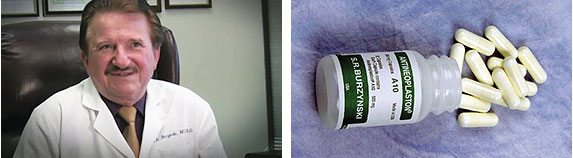
Dr. Stanislaw Burzynski, antineoplastons, and the selling of an orphan drug as a cancer cure
Over the last couple of weeks, I’ve been spending a lot of time (and, characteristically, verbiage) analyzing the phenomenon known as Dr. Stanislaw Burzynski and his “cancer cure” known as antineoplastons. In part I of this series, Stanislaw Burzynski: Bad medicine, a bad movie, and bad P.R., I used the legal threats against bloggers criticizing the credulous promotion by the British press...
Integrative Medicine: “Patient-Centered Care” is the new Medical Paternalism
Integrative Pitchmen Several of us have written about how contemporary quacks have artfully pitched their wares to a higherbrow market than their predecessors were accustomed to, back in the day. Through clever packaging,* quacks today can reasonably hope to become professors at prestigious medical schools, to control and receive substantial grant money from the NIH, to preside over reviews for the Cochrane...
Pediatrics & “CAM” II: just wrong
In November, the journal Pediatrics published an entire supplement devoted to Pediatric Use of Complementary and Alternative Medicine: Legal, Ethical and Clinical Issues in Decision-Making. The authors purport to have “examined current legal, ethical, and clinical issues that arise when considering CAM use for children and identified where gaps remain in law and policy.” (S150) Their aim is to “illustrate the relevance...
Update on CPSOs Draft Policy
Four months ago David Gorski wrote about the College of Physicians and Surgeons of Ontario’s (CPSO) draft policy on “non-allopathic” medicine. He pointed out: It’s obvious from the wishy-washy approach to the scientific basis of medicine, the waffle words when it comes to whether an “allopathic” physician should support “non-allopathic” therapies, and the apparently inadvertent use of language favored by quacks that there...
Stanislaw Burzynski: Bad medicine, a bad movie, and bad P.R.
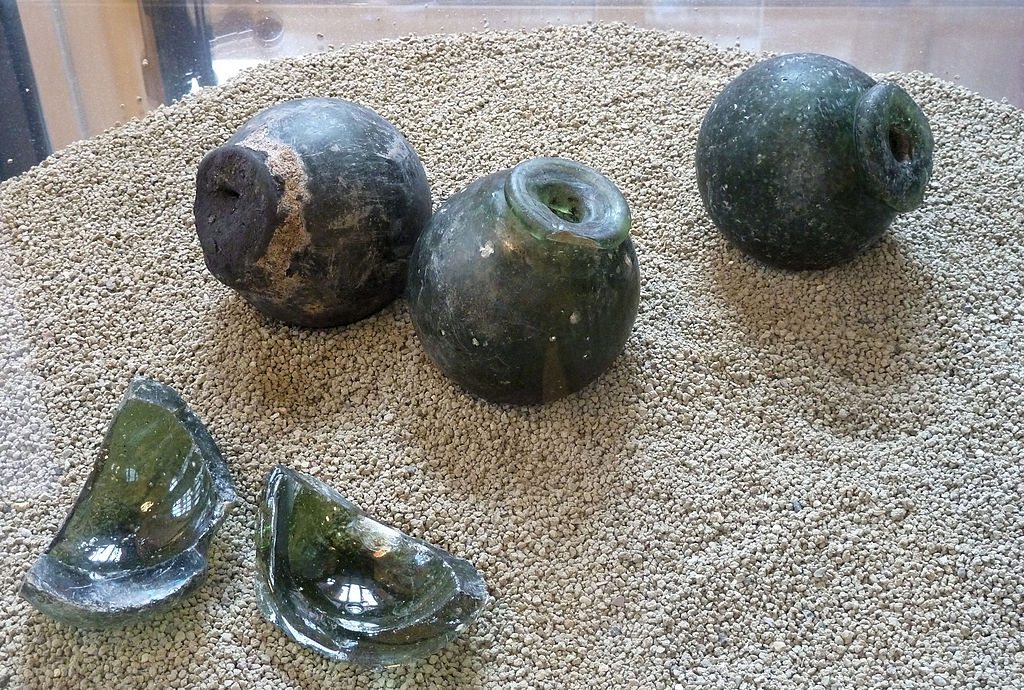
And the Lord spake, saying, “First shalt thou take out the Holy Pin. Then shalt thou count to three, no more, no less. Three shall be the number thou shalt count, and the number of the counting shall be three. Four shalt thou not count, neither count thou two, excepting that thou then proceed to three. Five is right out. Once the...
Pediatrics & “CAM” I: the wrong solution
Oh no! Not again! The venerable medical journal Pediatrics devotes an entire supplement this month to Pediatric Use of Complementary and Alternative Medicine: Legal, Ethical, and Clinical Issues in Decision-Making. We sense from the very first sentence that we are in familiar territory: Rapid increases the use of complementary and alternative medicine (CAM) raise important legal, ethical, clinical, and policy issues. (S150)...
Defining what a “physician” is
It takes more than a stethoscope and a white coat to be a physician. A generous dose of reality and a lot of training are also required.
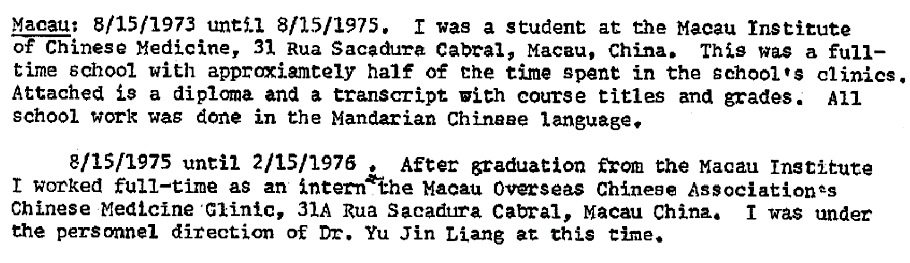
Dummy Medicine, Dummy Doctors, and a Dummy Degree, Part 2.3: Harvard Medical School and the Curious Case of Ted Kaptchuk, OMD (concluded)
A Loose End In the last post I wondered if Ted Kaptchuk, when he wrote the article titled “Effect of interpretive bias on clinical research,” had understood this implication of Bayes’s Theorem: that interpretations of most scientific investigations are exercises in inverse probability, and thus cannot logically be done without consideration of knowledge external to the investigation in question. I argued that...
CAM practitioners react to Andrew Weil’s proposal for a board certification for integrative medicine. It isn’t (all) pretty.
About a month ago, I discussed a rather disturbing development, namely the initiative by Dr. Andrew Weil to set up something he was going to call the American Board of Integrative Medicine, all for the purpose of creating a system of board certification for physicians practicing “integrative medicine” (IM), or, as I prefer to call them, physicians who like to integrate pseudoscience...
The Cure
Legislative Alchemy In Legislative Alchemy I: Naturopathy, II: Chiropractic and III: Acupuncture, we learned how state legislatures transform scientifically implausible and unproven diagnostic methods and treatments into legal health care practices. Examples typical of the sheer nonsense found in both proposed and actual legislation include: Naturopathic health care [is] a system of health care practices for the prevention, diagnosis, evaluation and treatment...