

Category: Medical Academia
Surprise, surprise! Dr. Andrew Weil doesn’t like evidence-based medicine
Dr. Andrew Weil is a rock star in the “complementary and alternative medicine” (CAM) and “integrative medicine” (IM) movement. Indeed, it can be persuasively argued that he is one of its founders, at least a founder of the its most modern iteration, and I am hard-pressed to think of anyone who did more in the early days of the CAM/IM movement, back...
Cochrane is Starting to ‘Get’ SBM!
This essay is the latest in the series indexed at the bottom.* It follows several (nos. 10-14) that responded to a critique by statistician Stephen Simon, who had taken issue with our asserting an important distinction between Science-Based Medicine (SBM) and Evidence-Based Medicine (EBM). (Dr. Gorski also posted a response to Dr. Simon’s critique). A quick-if-incomplete Review can be found here. One...
Coming to an emergency room near you in 2030?
I’ve frequently lamented what might happen if the current trend towards quackademic medicine continues unabated, and quackery becomes fully “integrated” with science-based medicine as a co-equal. Interestingly, this concept has provided fodder for several comedians. For example, the first comedy sketch I discovered on this theme was homeopathic e.r. Then a couple of years ago, Mitchell and Webb brought us the British...
CAM In Medical Schools
A recent US News and World Report article on the incorporation of complementary and alternative medicine (CAM) into US medical schools credulously repeats the pro-CAM marketing hype. There is no evidence that the author, Meryl Davids Landau, spoke to a single critic of CAM, or is even aware that such criticism exists. The result looks more like marketing copy than serious journalism....
The Hazards of “CAM”-Pandering
Steven Salzberg, a friend of this blog and Director of the Center for Bioinformatics and Computational Biology at the University of Maryland, is on the editorial boards of three of the many journals published by BioMed Central (BMC), an important source of open-access, peer-reviewed biomedical reports. He is disturbed by the presence of two other journals under the BMC umbrella: Chinese Medicine...
A University of Michigan Medical School alumnus confronts anthroposophic medicine at his alma mater
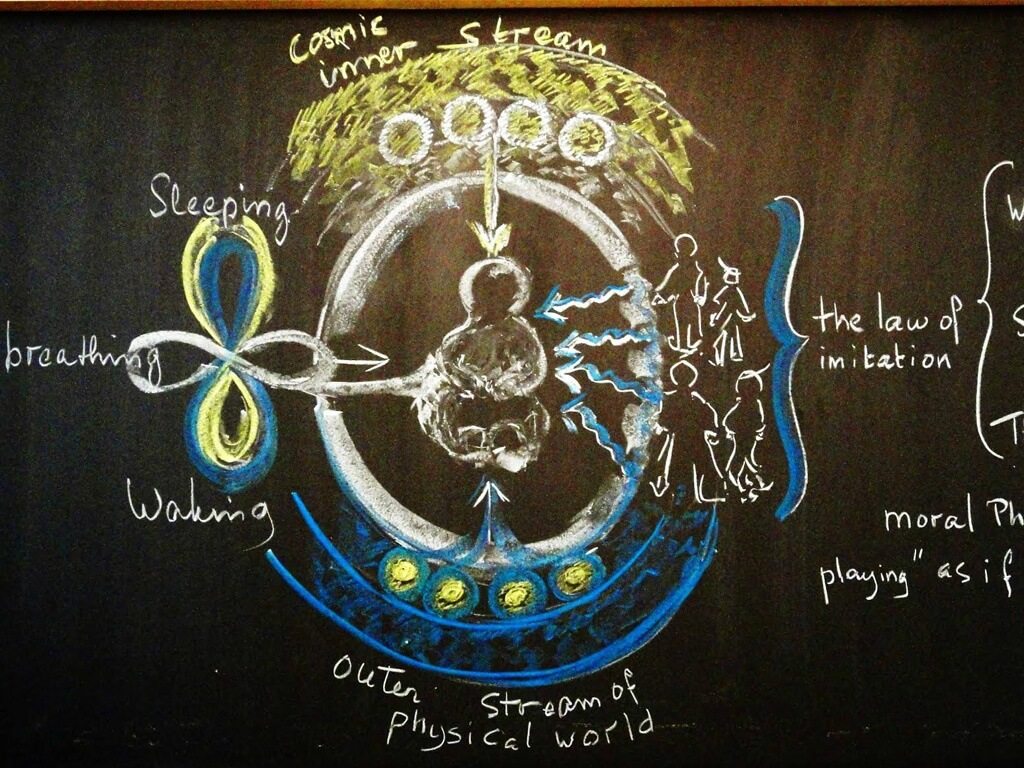
Anthroposophic medicine is the creation of Rudolf Steiner, who also founded Waldorf Schools. It's a form of medicine that is vitalistic and full of quackery. Unfortunately, my medical alma mater, the University of Michigan, has a program in anthroposophic medicine. It's a small program, but that it exists at all is a disturbing reminder how quackery can infiltrate even the best medical...
Of SBM and EBM Redux. Part IV, Continued: More Cochrane and a little Bayes
OK, I admit that I pulled a fast one. I never finished the last post as promised, so here it is. Cochrane Continued In the last post I alluded to the 2006 Cochrane Laetrile review, the conclusion of which was: This systematic review has clearly identified the need for randomised or controlled clinical trials assessing the effectiveness of Laetrile or amygdalin for...
CAM on campus: Black History Month
I emerge from the haze of board exams and residency interviews to blog about a recent development on campus that disappointed me, involving a university celebration of Black History Month.
Of SBM and EBM Redux. Part IV: More Cochrane and a little Bayes
NB: This is a partial posting; I was up all night ‘on-call’ and too tired to continue. I’ll post the rest of the essay later… Review This is the fourth and final part of a series-within-a-series* inspired by statistician Steve Simon. Professor Simon had challenged the view, held by several bloggers here at SBM, that Evidence-Based Medicine (EBM) has been mostly inadequate...
The Good Rewards of Bad Science
All the world sees us In grand style wherever we are; The big and the small Are infatuated with us: They run to our remedies And regard us as gods And to our prescriptions Principles and regimens, they submit themselves. Molière, The Imaginary Invalid (1673)1 The passage above is part of a burlesque doctoral conferment ceremony, where the French playwright Molière (1622-1673)...