

Category: Medical Academia
“Obama Promises $156 Million to Alzheimer’s…But where will the money come from?” That’s easy: the NCCAM!
The quoted language above is part of the headline of this story in today’s The Scientist: Citing the rising tide of Americans with Alzheimer’s—projections suggest 10 million people will be afflicted by 2050—the Obama administration and top National Institutes of Health officials are taking action. On February 7, they announced that they will add an additional $80 million to the 2013 NIH...
Teaching Pseudoscience In Universities
The debate about teaching so-called complementary and alternative medicine (CAM) in universities and medical schools rages on. Attention has turned recently to Australia, where the infiltration of CAM into universities is a growing problem. A new group has formed called the Friends of Science in Medicine to advocate for maintaining high standards of science in medical academia. They have been successful in...
What is Science?
Consider these statements: …there is an evidence base for biofield therapies. (citing the Cochrane Review of Touch Therapies) The larger issue is what constitutes “pseudoscience” and what information is worthy of dissemination to the public. Should the data from our well conducted, rigorous, randomized controlled trial [of ‘biofield healing’] be dismissed because the mechanisms are unknown or because some scientists do not...
Adventures in defending science-based medicine in cancer journals: Energy chelation
My co-bloggers and I have spent considerable time and effort over the last four years writing posts for this blog (and I for my not-so-super-secret other blog) bemoaning the infiltration of quackademic medicine into what once were bastions of evidence- and science-based medicine. We’ve discussed at considerable length reasons for why this steady infiltration of pseudoscience into medical academia has been occurring....
Shilling for traditional Chinese medicine: Nature leaves its readers a lump of coal before Christmas
I’ve subscribed to Nature for many years now, even though I don’t always read it. Nature is one of the oldest and most respected scientific journals around. It’s been around since 1869 and is said to be the world’s most cited journal. What makes Nature unusual these days is that it’s one of the last of the remaining general science journals and...
Woo-omics
Every so often, I come across studies that leave me scratching my head. Sometimes, these studies are legitimate scientific studies that have huge flaws or come from an assumption that is very off-base. Other times, they involve what Harriet Hall has termed “tooth fairy science,” wherein the tools of science are used to study a phenomenon that is fantastical, whose very existence...

Reporting back on my Grand Rounds experience at FSU
I'm no Neil deGrasse Tyson, but I think my talk at Florida State University went pretty well.
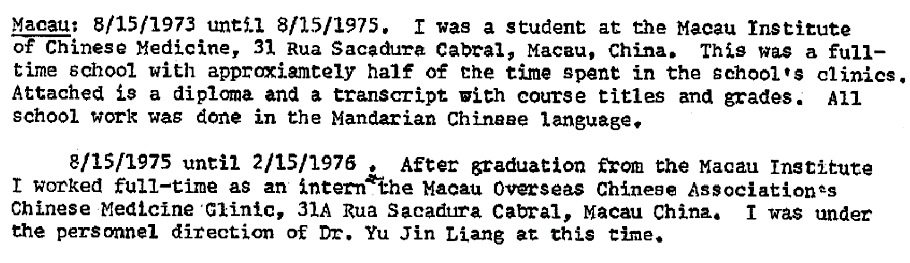
Dummy Medicine, Dummy Doctors, and a Dummy Degree, Part 2.3: Harvard Medical School and the Curious Case of Ted Kaptchuk, OMD (concluded)
A Loose End In the last post I wondered if Ted Kaptchuk, when he wrote the article titled “Effect of interpretive bias on clinical research,” had understood this implication of Bayes’s Theorem: that interpretations of most scientific investigations are exercises in inverse probability, and thus cannot logically be done without consideration of knowledge external to the investigation in question. I argued that...
Please Don’t Define “Complementary and Alternative Health Practices”!
Since I have a master’s and doctoral degree in health education and since I’m a professor in a department of public health with an undergraduate curriculum that includes substantial attention to health education, I participate in the email discussion group of HEDIR, the Health Education Directory. On August 16th, I received a message to the discussion group from the American Association for...
Dummy Medicine, Dummy Doctors, and a Dummy Degree, Part 2.2: Harvard Medical School and the Curious Case of Ted Kaptchuk, OMD (cont. again)
“Strong Medicine”: Ted Kaptchuk and the Powerful Placebo At the beginning of the first edition of The Web that has no Weaver, published in 1983, author Ted Kaptchuk portended his eventual academic interest in the placebo: A story is told in China about a peasant who had worked as a maintenance man in a newly established Western missionary hospital. When he retired...