


I must confess that this week was a trying week, at least from an SBM point of view. Between the ongoing measles outbreaks, the takeover of the Interagency Autism Coordinating Committee (IACC) by cranks and antivaxxers, and more, as the weekend approached I was hard-pressed (again) to decide what to write about and feeling drained after the last few weeks, which included “autism biomed” quackery taking over the main NIH Institute dedicated to developmental disorders, the impending subversion of NIH peer review to allow political appointees to decide which grant applications are funded, and more cancer quackery from “make America healthy again” (MAHA) advocates. Then I saw what appears to have been a little-noticed announcement from NIH Director “Podcast Jay” Bhattacharya: Dr. Wendy Weber to serve as director of the National Center for Complementary and Integrative Health.
National Center for Complementary and Alternative
Health.
Longtime readers will know that the National Center for Complementary and Integrative Health (NCCIH), formerly known since the late 1990s as the National Center for Complementary and Alternative Medicine (NCCAM), has long been a topic of this blog. The reason is pretty clear. NCCIH has long funded research into what we like to call “quackademic medicine”; i.e., unproven, disproven, and often pseudoscientific “medicine” that falls under the rubric of “alternative” or “integrative” medicine, such as acupuncture, reiki, chiropractic, and the like. In fairness, the spectrum of interventions studied with NCCIH-issued grants does range from the evidence-based (e.g., diet, exercise, and all the things that MAHA claims to be promoting) to the totally quacky, such as homeopathy, reiki, and acupuncture (especially acupuncture). The overall result, of course, is that lumping together all these modalities tends to cloak the quackier elements of “complementary and alternative medicine” (CAM), or, as its advocates prefer to call it, “integrative medicine” under the seeming legitimacy of lifestyle interventions, such as nutrition, exercise, and other lifestyle elements, such as getting adequate sleep, as if it’s all equally worthy of study.
So, why would the announcement of a new NCCIH Director “inspire” me to write about it, given that NCCIH has existed in its current form, other than a renaming a decade ago, for nearly three decades? Let’s go to the press release:
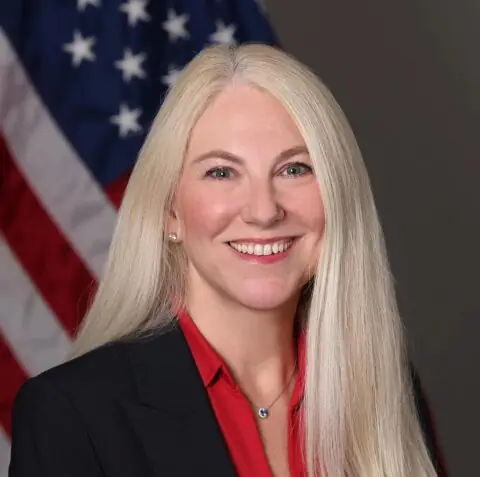
Today, National Institutes of Health (NIH) Director Jay Bhattacharya, M.D., Ph.D., announced that Wendy Weber, N.D., Ph.D., has been selected to serve as director of NIH’s National Center for Complementary and Integrative Health (NCCIH). Since October 2025, Dr. Weber has provided scientific leadership and strategic counsel and contributed to budget oversight to NCCIH as acting deputy director. She began her new role on August 23, 2026.
“As the home of complex, multi-system health research, NCCIH is central in our mission to understand multifaceted chronic diseases and the role of nutritional interventions on health,” Bhattacharya said. “Dr. Weber’s history of leadership in whole-person health, pain management research, and deep connection to NIH make her a natural fit to lead the center into a new chapter of rigorous scientific discovery.”
As the head of NCCIH, Dr. Weber will manage the administration of the center’s approximately $170 million budget. NCCIH supports research that aims to determine the fundamental science, usefulness, and safety of complementary and integrative health approaches and their roles in improving health and health care.
And:
Prior to joining NIH as a program director in 2009, Dr. Weber led clinical investigations of complementary health interventions at Bastyr University, Kenmore, and Massachusetts General Hospital, Boston. As a faculty member at Bastyr University, Dr. Weber conducted clinical trials of botanical interventions, including Echinacea for the common cold. She was the first naturopathic physician to receive an NIH career development (K) award, which supported her clinical trial of St. John’s Wort for attention-deficit/hyperactivity disorder.
Dr. Weber is a licensed naturopathic physician. She received her N.D. from Bastyr University, Kenmore, and later earned a Master of Public Health and Ph.D. at the University of Washington, Seattle. This combination of clinical training in naturopathic medicine and doctoral-level research training in epidemiology gives Dr. Weber a rare dual perspective, bridging complementary health practice with rigorous scientific methodology.
Why is it significant that the new NCCIH Director is a naturopath? Longtime readers will know. I will also say that, in fairness, NCCIH has been on this trajectory for a long time, and it’s entirely possible that Not-A-Doctor Wendy Weber might have been appointed to head NCCIH under almost any administration. Indeed, I remember that the only good idea that I saw in the first NIH budget proposed by the Trump administration for FY2026 last year was to eliminate NCCIH, although the significance of eliminating NCCIH might have meant nothing, given that Podcast Jay has stated that he wanted to turn NIH into the “research arm of MAHA,” which to me sounds like turning all of NIH into NCCIH studying the “integration” of, as Mark Crislip put it, the cow pie of alternative medicine with the apple pie of science- and evidence-based medicine. (He also noted in 2012, “If you mix cow pie with apple pie, it does not make the cow pie taste better; it makes the apple pie worse.”)
I also must note that the previous NCCIH Director was Helene Langevin, who was very much into “proving” acupuncture using bad science and pseudoscience. Indeed, from an SBM perspective, she was most famous for claiming to have identified anatomic correlates to acupuncture “meridians” using ultrasound and impedance measurements. (She didn’t.) Does that mean that NCCIH might as well go full woo and hire a naturopathic quack as its director?
Naturopathy: A brief refresher
We haven’t written much about naturopathy at SBM in a long time, so it’s worth briefly recounting what naturopathy is…and is not.
If you want to listen to what naturopaths themselves say about their specialty, I like to refer to what the Society of Naturopaths says about it, in particular about its history:
The term ‘Naturopath’ is an Anglicized version of the term ‘physician’ which was used by Hippocrates from the Greek root word ‘physikos’ meaning ‘nature’. This suggests that every practitioner of naturopathic medicine should to be skilled in Nature and must strive to know what man is in relation to food, drink, occupation and the effects that each of these has upon the other. In this sense, ‘nature’ also means a person’s ‘nature’ or constitution.
This part sounds fairly unobjectionable, as “food, drink, occupation” and their effects on health are subjects that science- and evidence-based medicine has long concerned itself with. The devil, as they say, is in the details, specifically how naturopathy addresses these issues. Naturopathy dates back to the late 19th century:
The main practitioner who is known to have formulated naturopathy at the beginning of the 20th century was Benedict Lust who trained in chiropractic and adopted the term “Naturopath” which he purchased from a colleague of his, a Dr John Scheel. Lust opened the first ‘Health food store’ in America in 1895 (originally called ‘Kneipp store’) and set up the American School of Naturopathy. In 1902 Lust replaced the Kneipp societies with the ‘Naturopathic Society of America’, later changed to the ‘American Naturopathic Association’. Lust claimed at one point to have 40,000 practitioners practicing naturopathy. In the early 20th century naturopaths were on a par with doctors and were sought after for their vast and diverse knowledge of health and disease.
Benedict Lust was quite the character. He was a chiropractor, and he believed…well, let’s just quote his 1945 obituary in The New York Times:
The members of the American Naturopathic Association do not believe in vaccination, drug treatments, medicinal remedies or vivisection. The president said at the association’s convention in 1925 that “most people die from the effects of wrong living and drugs. Cancer can be cured by natural processes without medicine or surgery. Most diseases and chronic sicknesses are only aggravated by the use of medicine.” Among the writings of Dr. Lust are “The Crime of Vaccination,” “Vitalisme Series” and “Biological Blood Washing Method.”
So…naturopaths today, no matter how much they try to represent themselves as “scientific,” follow in the footsteps of Not-A-Doctor Lust. He was antivax and practiced a *lot* of quackery. This April, he was even a side topic of an episode of one of my favorite podcasts, Behind the Bastards, which described a grifter disciple of Lust named Robert Spears, who was president of the Texas Naturopath Association from 1954-1957 and was alleged to have placed a bomb aboard National Airlines Flight 967, an aircraft that went missing over the Gulf of Mexico on November 16, 1959, killing 42 people. But I digress…a little. I just wanted the chance to recommend Behind the Bastards.
Back to the Society of Naturopaths, who even mentions Sir Arbuthnot Lane, a medical doctor and surgeon, who believed that nearly all disease results from “autointoxication” due to the backup of fecal matter in the colon, noting:
All of the research of these naturopathic pioneers into causes of cancer via diet, maintaining good colon health, the importance of probiotics, the problems of too much red meat, the need for exercise and fresh air is now being resurrected and fed back to the general public after extensive research confirming that what they originally said nearly 100 years ago is in fact correct.
I’ve written about Sir Lane before as one of the “inspirations” for the recurring fad of “detoxification” that has been consistently advocated by naturopaths. One thing that the Society of Naturopaths doesn’t mention is that, as a surgeon, early in his career Lane advocated total colectomy (removal of the entire colon) for the autointoxication that was thought to be the cause of diseases ranging from lassitude to epilepsy. That goes far beyond just advocating eating less meat and engaging in exercise. Moreover, even the maligned medicine of the time advocated fresh air, better diet, and exercise. But back to Sir Lane briefly. Given that there were no antibiotics effective against colonic flora back then, intestinal surgery was fraught with peril due to the high rate of sepsis and death; this approach was reckless indeed, even by the standards of the time. Eventually, even Sir Lane came to the same conclusion and by the 1920s had changed his mind, deciding that diet and enemas were the answer.
Naturally (if you’ll excuse my use of the word), naturopaths blame their fall from favor from their glory days in the early 20th century on the Flexner Report, whose publication in 1911 resulted in medical schools basing their curriculum on science and eliminating various unscientific and pseudoscientific teachings that naturopaths espoused:
The US Flexner report of 1910 criticised the number of medical schools in the US and called on them to have higher admission fees and higher graduation standards. Many medical schools fell short of the standards stipulated in the report and either closed ‘overnight’ or amalgamated with larger schools. In addition, a medical school could not teach naturopathy or homeopathy and if it did then graduates would not be recognised as doctors and therefore would not be able to find work. This, together with the public’s infatuation with technology and ‘a pill for an ill’; World War 2’s need for the development of surgery, and growing sophistication of the American Medical Association under the leadership of Fishbein, together with the death of Benedict Lust in 1945, all led to the decline of naturopathy.
The naturopaths then describe today’s version of naturopathy as being—of course!—nothing but science-based. Citing the discovery of vitamins, Linus Pauling, and Rachel Carson as proving their contention that environment and diet impact health (as if anyone was arguing that they do not), the Society of Naturopaths proclaims:
Naturopathy is finally re-emerging in the 21st century as people become disillusioned by modern medicine which only treats symptoms and rarely addressing the cause of disease. Media coverage of a healthy diet and lifestyle being conducive to good health has spurred people into taking more responsibility for their well-being and seeking out naturopathic practitioners.
Naturopathy now incorporates scientific advances in modern medicine, whilst remaining true to its vitalistic approach. The art of modern naturopathy is to be able to blend advances in modern medicine with the ancient traditions. Science is beginning to prove what the ancient Eastern medical traditions have been teaching and practicing for centuries.
At least they admit that naturopathy is based in vitalism, an ancient belief that the difference between living and non-living things is some sort of non-material vital force. As Dr. Peter Lipson put it:
Vitalism, an ancient and discredited philosophy, has become irrelevant in modern thinking with two important exceptions: alternative medicine, and religion. That, right there, should tell you something important.
One brief way that I like to describe naturopathy is thusly: Naturopathy is a hodge-podge of mostly unscientific treatment modalities based on vitalism and other prescientific notions of disease. As a result, typical naturopaths are more than happy in essence to “pick one from column A and one from column B” when it comes to pseudoscience, mixing and matching treatments including traditional Chinese medicine, homeopathy, herbalism, Ayurvedic medicine, applied kinesiology, anthroposophical medicine, reflexology, craniosacral therapy, Bowen Technique, and pretty much any other form of unscientific or prescientific medicine that you can imagine. Despite their affinity for non-science-based medical systems, naturopaths crave the imprimatur of science. As a result, they desperately try to represent what they do as being science-based, and they’ve even set up research institutes, much like the departments, divisions, and institutes devoted to “complementary and alternative medicine” (CAM) that have cropped up on the campuses of legitimate medical schools and academic medical centers like so many weeds poking through the cracks in the edifice of science-based medicine. Naturopaths also really, really don’t like it when they encounter criticism that their “discipline” is not science-based.
Not-A-Doctor Wendy Weber epitomizes this aspect of naturopathy.
What Not-A-Doctor Wendy Weber at NCCIH means
As far as naturopaths go, Not-A-Doctor Wendy Weber is less objectionable than average, if only because she belongs to the group of naturopaths that claim to be rooted in science. That being said, she has been discussed on this blog before. She’s also been at the NIH for 15 years, which is a long time, and has served as acting deputy director, a position from which she has now been promoted to Director. To get an idea of her approach to the evidence regarding “integrative” or “alternative” treatment modalities, let’s revisit her mentions on the blog thus far.
First, Jann Bellamy noted that Wendy Weber had co-authored a survey of naturopaths and their use of “detox” methods, pointing out that the authors had stated that “environmental chemicals can have deleterious health effects,” which is, of course, undeniably true. However, even after basically all but admitting that there was no evidence supporting the various “detoxification” treatments, even as the survey showed that their use was widespread among naturopaths, the authors contended:
As increasing evidence of the relationship between body burden and adverse health effects of synthetic chemicals emerges, safe and effective methods of reducing body burden levels will be a vital component of naturopathic medicine, and complementary, alternative, and integrative medicine in general. Detoxification therapies used by NDs may serve as an adequate means to reduce the body burden of synthetic chemicals found today in humans; however, scientifically rigorous research is needed to determine the safety and efficacy of these therapies. The authors’ observation that only approximately 50% of surveyed NDs reported use of laboratory measures to assess toxicant exposure, or to determine the efficacy of treatment is surprising and could be a result of the survey design (the validity of certain types of toxicant testing is highly controversial, and beyond the scope of this survey). Nevertheless, it is clear that further research and practice standards are needed.
Yes, Not-A-Doctor Weber claims to be science-based, but she is still clearly rooted in the world of naturopathy. For one thing, again, we already have enough evidence to know that the vast majority of the “detox” regimens used by naturopaths are rank pseudoscience and quackery. More research is not needed. Moreover, whether or not you should do lab testing to see if you are actually reducing the level of a “toxin” that you are claiming that your “detox” treats is not controversial in science-based medicine. If, for instance, I am using chelation therapy for one of its few evidence-based indications, acute heavy metal intoxication, then it is reasonable to check levels of the heavy metal being removed, both to assess efficacy and tell me when I can stop therapy. That most naturopaths don’t bother is one indication—among many—that the “toxins” they are supposedly removing are no more real than their “detox” methods are science-based.
The second mention of her in SBM relates to how she co-authored and then promoted a systematic review of “complementary approaches for pain management,” or what NCCIH likes to call “nonpharmacologic approaches” to pain management, no matter how much we remind them that nonpharmacologic approaches to pain management do not necessarily equal CAM. (CAM advocates in general and naturopaths in particular do like to claim all such interventions as being “CAM” or “integrative.”) My personal reading of the review led me to conclude that the evidence for, basically, all these interventions (acupuncture, massage, tai chi, chiropractic spinal manipulation, osteopathic spinal manipulation, yoga, etc.) was basically either consistent with placebo effects, highly equivocal, or negative.
None of that stopped Not-A-Doctor Weber from touting the review as telling us what does and does not work:
Notice how Weber basically admits, with a whole lot of hand waving, that we don’t know the mechanisms by which “complementary” therapies “work” for pain. Of course, that’s because the ones reviewed almost certainly do not, hoping that “future research” will answer those questions. Oh, and, Congress, keep funding us to do more pointless studies!
In fairness, I have to note that a lot of Weber’s research is fairly pedestrian. For example, she basically made her name 20 years ago by carrying out a randomized controlled clinical trial of St. John’s Wort for ADHD, which concluded that it didn’t work. She also carried out an RCT on echinacea to treat colds in children and reported that it didn’t work. Naturopaths did not like this. She later published a secondary analysis, concluding that “echinacea purpurea may be effective in reducing the occurrence of subsequent URIs in children.” Never let a good negative clinical trial go to waste, I say. Do subgroup analyses until you find something. (In fairness, it’s not just naturopaths who do this.)
I also found one article co-authored by her that concluded that “CAM diets were associated with increased quality of life in youth with diabetes, whereas supplement use and stress-reduction activities were associated with decreased quality of life.” I bet, at least for the supplements, although “CAM diet” was poorly defined in this article and seemed to include some combination of avoiding wheat and dairy, “organic/antibiotic-free/hormone-free,” and a blood type diet. Blood type diets are, of course, utter quackery, while avoiding wheat and dairy are appropriate only for a narrow set of conditions, not the near-universal use that naturopaths make of such recommendations. As for “organic/antibiotic-free/hormone-free,” such a diet is likely a wash.
Finally, I can’t help but mention, as I do in every post about naturopathy that I write, that you can’t have naturopathy without homeopathy, or, as I like to call it, The One Quackery to Rule Them All. Homeopathy is an integral part of naturopathic training, and it is included in the naturopathic licensing examination, or NPLEX. You can’t be a licensed naturopath, as Weber is, without knowing what naturopaths teach about homeopathy.
So, what does this all mean for NCCIH?
One thing about the history of NCCIH dating back to its foundation as NCCAM in 1998 and even before, when it was the Office of Alternative Medicine, has been a tension between the true believers in “alternative” medicine and CAM who thought he had cured his allergies with bee pollen and those who seriously want to do science. Remember, a true believer, Sen. Tom Harkin (D-Iowa), was the driving force behind the formation of OAM and then behind elevating OAM to a full Center.
Basically, the OAM ran into trouble almost immediately when its first director, Joseph M. Jacobs, ran afoul of Sen. Harkin by insisting on rigorous scientific methodology to study alternative medicine. To get an idea of what Jacobs was up against, consider that in 1995 Harkin wrote not just one, but two, commentaries, “The Third Approach” and “A Journal and a Journey.” In these two articles, Harkin basically advocated studying what has been “called ‘left-out medicine,’ therapies that show promise but that have not yet been accepted into the mainstream of modern medicine,” and explicitly stated that “mainstreaming alternative practices that work is our next step.” Unfortunately, Sen. Harkin had a bit of a problem with the way medical science actually goes about determining whether a health practice—any health practice—works, and railed against what he characterized as the “unbendable rules of randomized clinical trials.” Citing his use of bee pollen to treat his allergies, he went on to assert, “It is not necessary for the scientific community to understand the process before the American public can benefit from these therapies.”
Ultimately Jacobs resigned under pressure from Harkin, who repeatedly sided with the quacks. It also didn’t help that Jacobs complained about various “Harkinites” on the OAM advisory panel, some of whom represented cancer scams such as Laetrile and Tijuana cancer clinics. That Jacobs became tired of fighting and finally resigned is especially noteworthy given that Jacobs himself had originally been chosen to run OAM precisely because of his openness to the idea that there might actually be gems to be discovered buried among the turds of alternative therapies. Meddling by Harkin was a theme that kept repeating itself. Later, in 1998 after the then-NIH director had tried to impose more scientific rigor on the OAM, Harkin sponsored legislation to elevate the OAM to a full center, and thus was the NCCAM born. Not coincidentally, the NIH director has much less control over full centers than over offices. Interference by Sen. Harkin whenever the NIH director or NCCIH director tries to enforce more rigorous science has been a recurring theme, right up until Sen. Harkin retired in 2013. Indeed, what epitomized Harkin’s attitude towards NCCAM was a complaint he made in 2009 during his remarks to a Senate panel:
One of the purposes of this center was to investigate and validate alternative approaches. Quite frankly, I must say publicly that it has fallen short. It think quite frankly that in this center and in the office previously before it, most of its focus has been on disproving things rather than seeking out and approving.
Tell me you don’t understand how science works without telling me you don’t understand how science works.
Along with fellow founders of this blog, including Drs. Steve Novella, Kimball Atwood, and the late Wally Sampson, I have repeatedly stated that I don’t object in principle to investigating alternative medicine if it is done in a truly scientific manner that takes into account what is already known about such therapies. For example, given that the precepts of homeopathy violate multiple well-established laws of physics and chemistry, for homeopathy to be valid, we would have to discover that much of what we know about physics, chemistry, and biochemistry is not just wrong, but spectacularly wrong. That makes studying homeopathy in clinical trials unscientific, except perhaps as a means of quantifying placebo effects.
As I’ve also written, the conflict at the heart of NCCIH has been: Do we serve the alternative practitioners, or are we truly trying to look at these treatments scientifically? One way that NCCIH has pretended to be on the side of science is by never having an alternative medicine practitioner as its Director. Instead, NCCIH Directors have always been physicians or scientists, while the alternative medicine practitioners remained relegated to advisory committee roles. Unfortunately, even that pretense has been crumbling. The last NCCIH Director who tried—but often failed—to remain scientific was Dr. Josephine Briggs, who actually reached out to us in 2010 to meet and discuss about science-based medicine. (Truly, it was a different time, and that meeting now seems like a dream, even though Steve, Kimball, and I largely viewed the meeting as performative, so that Dr. Briggs could claim to have reached out to “both sides.”)
Then came Dr. Langevin, who, although a doctor, was a true believer in acupuncture and did some horrendously bad studies trying to “validate” acupuncture meridians.
It’s thus a natural—again, if you’ll excuse my use of the word—progression to appoint a naturopath to helm NCCIH. Besides being a seamless slide towards more pseudoscience, it fits in very well with the current administration and MAHA, which, as Podcast Jay tells us, is now setting the agenda for priorities in biomedical research. The only question that I have is not so much how much more quacky NCCIH will get under the leadership of a naturopathic quack, but how much the rest of NIH will come to resemble NCCIH under the leadership of a spineless pandemic minimizer who has said that NIH should be the “research arm of MAHA.” Unfortunately, in five years, NCCIH could become totally superfluous, as the rest of the NIH becomes indistinguishable from it. Indeed, it’s already happening.