

Tag: evidence-based medicine
Of SBM and EBM Redux. Part IV, Continued: More Cochrane and a little Bayes
OK, I admit that I pulled a fast one. I never finished the last post as promised, so here it is. Cochrane Continued In the last post I alluded to the 2006 Cochrane Laetrile review, the conclusion of which was: This systematic review has clearly identified the need for randomised or controlled clinical trials assessing the effectiveness of Laetrile or amygdalin for...
Of SBM and EBM Redux. Part IV: More Cochrane and a little Bayes
NB: This is a partial posting; I was up all night ‘on-call’ and too tired to continue. I’ll post the rest of the essay later… Review This is the fourth and final part of a series-within-a-series* inspired by statistician Steve Simon. Professor Simon had challenged the view, held by several bloggers here at SBM, that Evidence-Based Medicine (EBM) has been mostly inadequate...
Of SBM and EBM Redux. Part II: Is it a Good Idea to test Highly Implausible Health Claims?
Review This is the second post in a series* prompted by an essay by statistician Stephen Simon, who argued that Evidence-Based Medicine (EBM) is not lacking in the ways that we at Science-Based Medicine have argued. David Gorski responded here, and Prof. Simon responded to Dr. Gorski here. Between that response and the comments following Dr. Gorski’s post it became clear to...
Evidence-Based Medicine, Human Studies Ethics, and the ‘Gonzalez Regimen’: a Disappointing Editorial in the Journal of Clinical Oncology Part 1
Background: the distinction between EBM and SBM An important theme on the Science-Based Medicine blog, and the very reason for its name, has been its emphasis on examining all the evidence—not merely the results of clinical trials—for various claims, particularly for those that are implausible. We’ve discussed the distinction between Science-Based Medicine (SBM) and the more limited Evidence-Based Medicine (EBM) several times,...
New CMS Chief Donald Berwick: a Trojan Horse for Quackery?
NB: I posted this on Health Care Renewal a couple of days ago, figuring that Dr. Gorski’s post would suffice for the SBM readership (he and I had discussed the topic while at TAM8 last week). But Managing Editor Gorski has asked me to repost it here, which I’m happy to do. I am especially pleased to demonstrate that I am capable...
Brief Note: The Chiropractic Subluxation is Dead
The General Chiropractic Council, a UK-wide statutory body with regulatory powers, has just published a new position statement on the chiropractic subluxation complex: The chiropractic vertebral subluxation complex is an historical concept but it remains a theoretical model. It is not supported by any clinical research evidence that would allow claims to be made that it is the cause of disease or...
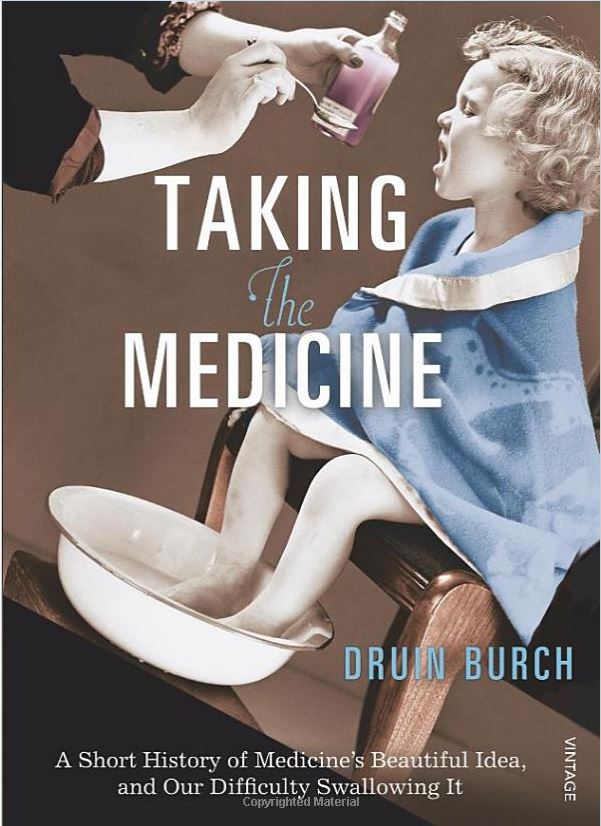
Medicine’s Beautiful Idea
For most of human history, doctors have killed their patients more often than they have saved them. An excellent new book, Taking the Medicine: A Short History of Medicine’s Beautiful Idea, and Our Difficulty Swallowing It, by Druin Burch, MD, describes medicine’s bleak past, how better ways of thinking led to modern successes, and how failure to adopt those better ways of...
Placebo Therapies: Are They Ethical?
Is it ethical to overstate the efficacy of a treatment option, if it might lead to a patient’s enhanced experience of that treatment? Your response to this question may reveal the degree to which you favor Complementary and Alternative Medicine (CAM). Let me explain. As far as I can tell, no CAM treatment has been proven effective beyond placebo. (If you’re not...
How To Get Physicians To Use The Same Science-Based Playbook
Pretty much everyone agrees that we need to improve the quality of healthcare delivered to patients in the US. We’ve all heard the frightening statistics from the Institute of Medicine about medical error rates – that as many as 98,000 patients die each year as a result of them – and we also know that the US spends about 33% more than...