

Tag: evidence-based medicine
The Forerunners of EBM
The term “evidence-based medicine” first appeared in the medical literature in 1992. It quickly became popular and developed into a systematic enterprise. A book by Ulrich Tröhler To Improve the Evidence of Medicine: The 18th century British origins of a critical approach argues that its roots go back to the 1700s in Scotland and England. An e-mail correspondent recommended it to me....
“How do you feel about Evidence-Based Medicine?”
That was the question asked on a Medscape Connect discussion I did a double-take. How do you feel? Could anybody object to the idea of basing treatments on evidence? The doctor who started the discussion asked: Besides using EBM, a lot of my prescribing comes from anecdotal experience and intuition. How about you? Where do you get your information from that you...
What is Science?
Consider these statements: …there is an evidence base for biofield therapies. (citing the Cochrane Review of Touch Therapies) The larger issue is what constitutes “pseudoscience” and what information is worthy of dissemination to the public. Should the data from our well conducted, rigorous, randomized controlled trial [of ‘biofield healing’] be dismissed because the mechanisms are unknown or because some scientists do not...
On the “individualization” of treatments in “alternative medicine,” revisited
As I contemplated what I’d like to write about for the first post of 2012, I happened to come across a post by former regular and now occasional SBM contributor Peter Lipson entitled Another crack at medical cranks. In it, Dr. Lipson discusses one characteristic that allows medical cranks and quacks to attract patients, namely the ability to make patients feel wanted,...
Dummy Medicine, Dummy Doctors, and a Dummy Degree, Part 2.2: Harvard Medical School and the Curious Case of Ted Kaptchuk, OMD (cont. again)
“Strong Medicine”: Ted Kaptchuk and the Powerful Placebo At the beginning of the first edition of The Web that has no Weaver, published in 1983, author Ted Kaptchuk portended his eventual academic interest in the placebo: A story is told in China about a peasant who had worked as a maintenance man in a newly established Western missionary hospital. When he retired...
Exorcism and Sorcery as Health Benefits?!
Luis Fernando Verissimo, a Brazilian writer, once proposed “voodoopuncture”. Instead of going to the acupuncturist, you would be treated without leaving home. The voodoopuncturist would stick acupuncture needles in the voodoo dolls of you! I add that voodoopuncture could be outsourced to Haiti and/or China. It is a win-win-win situation! — Leonardo Monasteri, Brazilian economist As unbelievable as this might sound, “voodoopuncture”...
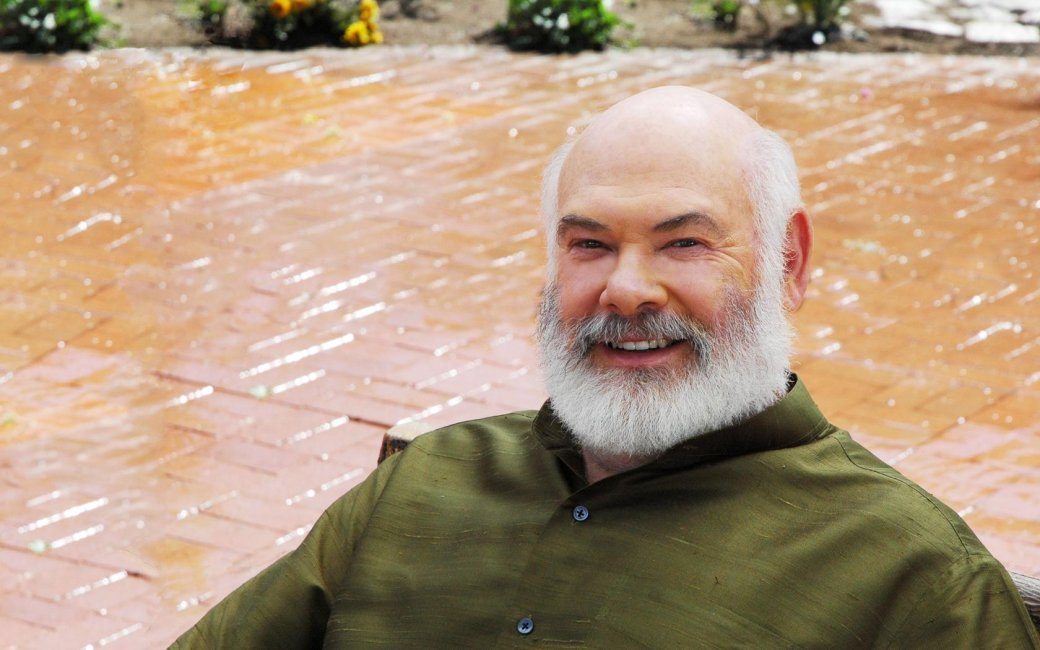
Surprise, surprise! Dr. Andrew Weil doesn’t like evidence-based medicine
Dr. Andrew Weil is a rock star in the “complementary and alternative medicine” (CAM) and “integrative medicine” (IM) movement. Indeed, it can be persuasively argued that he is one of its founders, at least a founder of the its most modern iteration, and I am hard-pressed to think of anyone who did more in the early days of the CAM/IM movement, back...
CAM and Evidenced-Based Medicine
Mark Tonelli, MD has problems with evidence-based medicine (EBM). He has published a few articles detailing his issues, and he makes some legitimate points. We at science-based medicine (SBM) have a few issues with the execution of EBM as well, so I am sympathetic to constructive criticism. In an article titled: Integrating evidence into clinical practice: an alternative to evidence-based approaches. The...
Of SBM and EBM Redux. Part IV, Continued: More Cochrane and a little Bayes
OK, I admit that I pulled a fast one. I never finished the last post as promised, so here it is. Cochrane Continued In the last post I alluded to the 2006 Cochrane Laetrile review, the conclusion of which was: This systematic review has clearly identified the need for randomised or controlled clinical trials assessing the effectiveness of Laetrile or amygdalin for...
Of SBM and EBM Redux. Part IV: More Cochrane and a little Bayes
NB: This is a partial posting; I was up all night ‘on-call’ and too tired to continue. I’ll post the rest of the essay later… Review This is the fourth and final part of a series-within-a-series* inspired by statistician Steve Simon. Professor Simon had challenged the view, held by several bloggers here at SBM, that Evidence-Based Medicine (EBM) has been mostly inadequate...