

Category: Science and Medicine
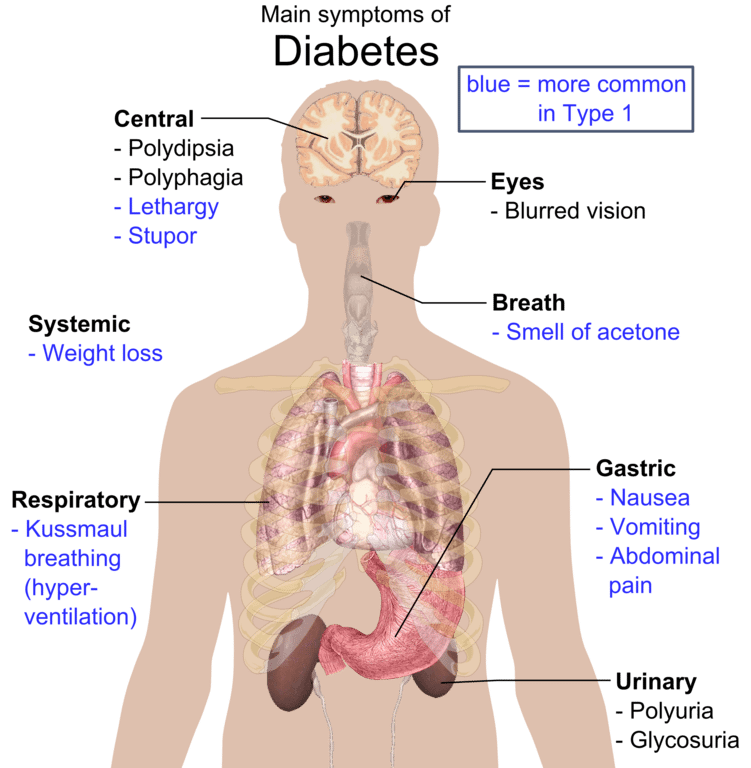
What is disease? Diabetes, diagnosis, and real science
How do we know if people are sick? First, a disease is defined, then we check patients against the criteria. Though it sounds simple, it's not always.
Applying evolutionary principles to cancer treatment
EDITOR’S NOTE: Unfortunately, this weekend, I was forced to get my slides together for the upcoming SBM Conference, plus editing a manuscript for resubmission, plus working on a manuscript that I should have submitted six months ago, plus reading over some grants, plus…well, you get the idea. What this means is that, alas, I didn’t have any time to prepare one of...
“The Oprah-fication of Medicine” in The Toronto Star
I’d just like to take a moment to engage in a little bit of shameless self-promotion and point out that an SBM post has actually seen print. Specifically, my post about the malign influence Oprah Winfrey’s promotion of dubious medical practices on her show (The Oprah-fication of Medicine) has been adapted (with heavy cutting and editing) into an op-ed piece in The...
Herd Immunity
Some infections can be eradicated from the face of the planet. Smallpox is the one example of disease eradication to date. Smallpox still exists in US and Russian labs, but there has been no wild cases since 1977. It is, like the Dorothy, history. Why were we able to eradicate smallpox? Three reasons: 1) There is only one form of smallpox. Unlike...
Should Vaccines Be Compulsory?
In the US children must have proof of vaccination before entering the public school system, although it is becoming easier in many states for parents to gain exemptions from this requirement. In the UK there is no such requirement. This distinction has allowed for a comparison of the impact of scaremongering about the safety of vaccines and the effectiveness of campaigns to...

The Oprah-fication of medicine
When it comes to quackery, Oprah really is the Queen of All Media. The Secret, Dr. Phil, "America's Quack" Dr. Oz, and Jenny McCarthy all got their start thanks to Oprah, plus a whole lot of New Age nonsense.
Homeocracy IV
In the three prior posts of this series I tried to analyze some of the defects in the randomized clinical rials (RCTs) of homeopathic remedies for childhood diarrhea. The first entry showed that the first two RCTs’ (done in Nicaragua) methods could not produce a meaningful result because of the way the RCTs were set up (methods.) The second entry showed that...
/
May 28, 2009
Science And The Game Of 20 Questions
An audience member at a recent NYC Skeptics meeting asked me how I handled conflict surrounding strongly held beliefs that are not supported by conclusive evidence. As a dentist, he argued, he often witnessed professionals touting procedure A over procedure B as the “best way” to do X, when in reality there are no controlled clinical trials comparing A and B. “How...
Acupuncture and Back Pain – Part II
Last week I discussed a clinical trial comparing standardized acupuncture, individualized acupuncture, placebo-acupuncture, and usual care. In that discussion I emphasized the comparison between the three acupuncture groups, which did not show any difference in outcome. These results are consistent with the overall acupuncture literature, which shows in the better controlled trials that it does not matter where you stick the needles...
Raw deal: Got diarrhea?
I recently saw a 14 year old girl in my office with a 2 day history of severe abdominal cramps, bloody diarrhea, and fever. Her mother had similar symptoms as did several other members of her household and some family friends. After considerable discomfort, everyone recovered within a few days. The child’s stool culture grew a bacterium called Campylobacter. Campylobacter is a nasty...