

Category: Science and the Media
Doing Eric Merola a favor…
Believe it or not, I’m going to do Eric Merola (who doesn’t particularly like me, to the point of thinking, apparently, that I’m a white supremacist who doesn’t like evidence but does like to eat puppies) a favor. Having been away at TAM and otherwise occupied hanging out with fellow skeptics and, more stressfully, getting ready to give a talk in front...
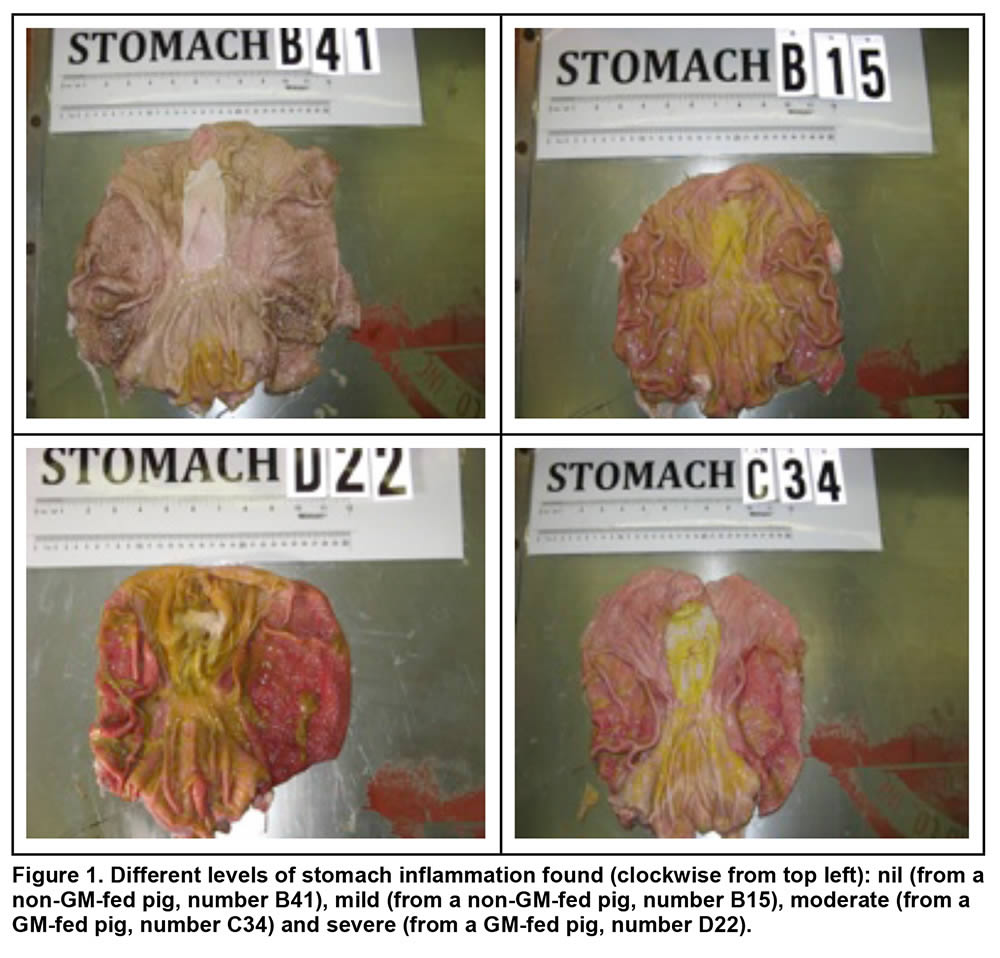
More bad science in the service of anti-GMO activism
I never used to write much about genetically modified organisms (GMOs) before. I still don’t do it that often. For whatever reason, it just hasn’t been on my radar very much. That seems to be changing, however. It’s not because I went seeking this issue out (although I must admit that I first became interested in genetic engineering when I was in...
BBC Panorama investigates Stanislaw Burzynski
Last week, I reviewed a long-expected (and, to some extent, long-dreaded) documentary by Eric Merola, a filmmaker whose talent is inversely proportional to his yen for conspiracy, pseudoscience, and quackery. Through a quirk of fate that couldn’t have worked out better if I had planned it myself, a long-expected investigation of the Burzynski Clinic by the BBC aired on its venerable news...
Stanislaw Burzynski: A deceptive propaganda movie versus an upcoming news report
Well, I’ve finally seen it, and it was even worse than I had feared. After having heard of Eric Merola’s plan to make a sequel to his 2010 propaganda “documentary” about Stanislaw Burzynski, Burzynski The Movie: Cancer Is Serious Business, which I labeled a bad movie, bad medicine, and bad PR, I’ve finally actually seen the finished product, such as it is....
Angelina Jolie, radical strategies for cancer prevention, and genetics denialism
I had been debating whether to blog about Angelina Jolie’s announcement last week in a New York Times editorial entitled My Medical Choice that she had undergone bilateral prophylactic mastectomy because she had been discovered to have a mutation in the BRCA1 gene that is associated with a very high risk of breast cancer. On the one hand, it is my area...

The deceptive rebranding of aspects of science-based medicine as “alternative” by naturopaths continues apace
That naturopathy is a veritable cornucopia of quackery mixed with the odd sensible, science-based suggestion here and there is not in doubt, at least not to supporters of science-based medicine (SBM). However, what naturopaths are very good at doing is representing their pseudoscience as somehow being scientific and thus on par with conventional SBM. So how do they accomplish this? Certainly, it’s...
The Sleep Bank
The following article is entirely made up. It’s satire. I am making fun of treatment modalities which are claimed by proponents to cure everything, from real medical ailments to fictional entities like “adrenal fatigue”. I am also poking fun at the state of medical reporting these days. If the concepts discussed seem similar to actual alternative medical practice, it is because a...
Too Much Information!
Some people would like to manage their own health care without having to depend on a doctor. They consult Google, diagnose themselves, and treat themselves. The Do-It-Yourself trend in lab tests continues apace. Without a doctor’s order, patients can get legitimate and/or questionable lab tests directly from various companies such as Any Lab Test Now and Doctor’s Data (which has sued Stephen...
Eric Merola’s conspiracy-mongering and more of Dr. Stanislaw Burzynski’s cancer “success” stories
About a month ago, Eric Merola screened his second movie about “brave maverick doctor” Stanislaw Burzynski, Burzynski: Cancer Is A Serious Business, Part 2 (henceforth referred to as “Burzynski II”), a screening that Brian Thompson and an unnamed colleague from the James Randi Educational Foundation (JREF) attended, took notes, and even managed to ask a question. At the time, I took advantage...
The “no compassion” gambit
As usual, I was impressed with Mark Crislip’s post on Friday in which he discussed the boundaries between science-based medicine and what we sometimes refer to as woo or what Mark often refers to as sCAM. It got me to thinking a bit, which is always a dangerous thing, particularly when such thinking leads to my writing something for my not-so-super-secret other...