

Category: Clinical Trials
Studying Placebo Effects
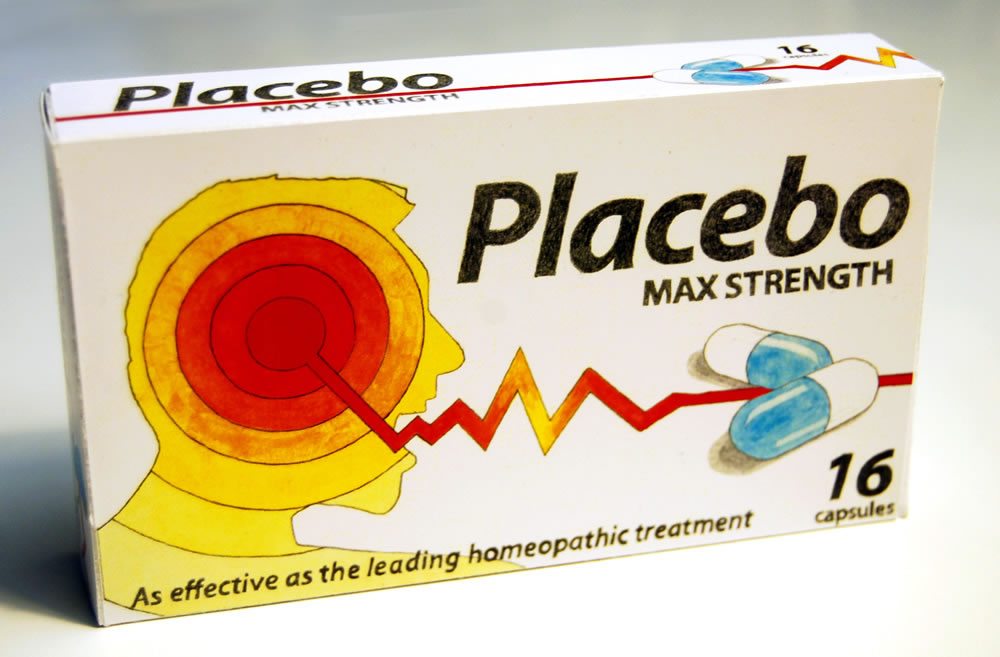
Measuring placebo effects (often misleadingly referred to as the placebo effect – singular) is a part of standard clinical trial design, because they need to be distinguished from the physiological effects of the treatment under study. Rarely, however, are placebo effects the actual target being measured, but such is the case with a new study published in the most recent edition of...
The Ethics of “CAM” Trials: Gonzo (Part II)
Laetrile and the Politics of NIH-Sponsored trials of “Alternative Cancer Treatments” Part I of this blog ended by asking how, in light of the implausible and arduous nature of the “Gonzalez regimen” for cancer of the pancreas, and the unconvincing “best case series,” the NIH could ever have decided to fund a trial of it.† This entry will begin to answer that question. In so...
The Ethics of “CAM” Trials: Gonzo (Part I)
Blogger’s note: This blog, which is rough going in places, will be presented in either 2 or 3 parts (I won’t know which until next week). I’ll post a part each week until it is complete, but due to overwhelming popular demand I promise to maintain the every-other-week posting of the far more amusing Weekly Waluation of the Weasel Words of Woo/2. Introduction On Feb. 25,...
When impressive science fails to impress patients
One of the greatest challenges in medicine can sometimes be to convince patients that the results of scientific and medical research apply to them, or, at the very least, to explain how such results apply. One of the reasons that medicine based not on science or evidence fluorishes is because it can be so hard to explain to patients why a particular...
Do Antidepressants Work? The Effect of Publication Bias
A recent meta-analysis of the most commonly prescribed antidepressant drugs raises some very important questions for science-based medicine. The study: Initial Severity and Antidepressant Benefits: A Meta-Analysis of Data Submitted to the Food and Drug Administration, was conducted by Irving Kirsch and colleagues, who reviewed clinical trials of six antidepressants (fluoxetine, venlafaxine, nefazodone, paroxetine, sertraline, and citalopram). They looked at all studies...
RCT Plausibility Scale
After a few intro paragraphs, I want to present a scale of probability to estimate a value of a “prior” to plug into the formula for obtaining a Bayes Factor. The scale can help to estimate a value, but will still rely on an estimate, the non-quantitative element in Bayesian simulations. However, the checklist may at least provide some objective bases on...
/
March 6, 2008
Bad scientific arguments in the service of animal rights activism
One of the greatest threats to the preclinical research necessary for science-based medicine today is animal rights activism. The magnitude of the problem came to the forefront again last week with the news that animal rights terrorists tried to enter the home of a researcher at the University of California Santa Cruz (UCSC) whose research uses mice to study breast cancer and...
Glucosamine Update: A New Study and a New Product
When I recently wrote about glucosamine, I discussed the evidence up through the New England Journal of Medicine study of 2006, which I thought was a pretty definitive study showing that neither glucosamine, chondroitin or a combination of the two was more effective than placebo. Subsequent studies have continued to fuel the controversy. One 2007 study showed that glucosamine sulfate was better than placebo for knee osteoarthritis. Another 2007 study showed...
When the popularity of new surgical procedures outpaces science
In science- and evidence-based medicine, the evaluation of surgical procedures represents a unique challenge that is truly qualitatively different from the challenges in medical specialties. Perhaps the most daunting of these challenges is that it is often either ethically unacceptable or logistically impossible to do the gold-standard clinical trial, a double-blind, randomized placebo trial for an operation. After all, the “placebo” in...
Prior Probability: the Dirty Little Secret of “Evidence-Based Alternative Medicine”—Continued
This is an addendum to my previous entry on Bayesian statistics for clinical research.† After that posting, a few comments made it clear that I needed to add some words about estimating prior probabilities of therapeutic hypotheses. This is a huge topic that I will discuss briefly. In that, happily, I am abetted by my own ignorance. Thus I apologize in advance for simplistic or incomplete...