

Tag: pediatrics
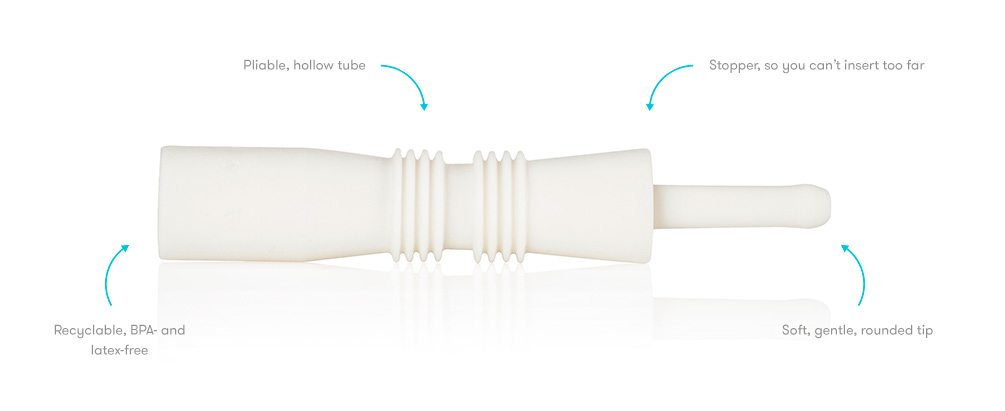
The Windi: Revolutionary Relief for Colic or a Pain in the Butt
We tend to cover some very serious topics here on Science-Based Medicine. In fact, most of our posts are downright depressing. This will hopefully not be one of them. In just the past few weeks we have written about the public health menace of anti-vaccine pseudoscience, autistic children being subjected to dangerous bleach enemas, and chiropractic-induced stroke in children. Unsurprisingly, there is...
Don’t just stand there, do nothing! The difference between science-based medicine and quackery
The Merriam-Webster Dictionary defines science as: Knowledge about or study of the natural world based on facts learned through experiments and observation. And: Knowledge as distinguished from ignorance or misunderstanding. While this should distinguish science from pseudoscience, those who practice the latter often lay claim to the same definition. But one of the major differences between science and pseudoscience is that science...
Hot-Zone Schools and Children at Risk: Shedding light on outbreak-prone schools
The subject of parental vaccine refusal and the impact that has on disease outbreaks has been covered many times on SBM and elsewhere. I apologize to our readers who are growing tired of the subject, but there is perhaps no subject more deserving of focus and repetition. There’s also an important angle to the discussion that I’ve written on previously and which...
If you don’t buy this supplement for your child, you’re a terrible parent
The supplement industry wants you to buy their products, and they’re not above using a little parental guilt to make you into a customer. In the photo above, the promoter is my local pharmacy, where the large window display caught my eye: Give your Child The Tools to SUCCEED in School! Who doesn’t want their child to succeed? And if you knew...
Legislating Ignorance
Science is under attack, and not just from anti-vaccine celebrities and parents with degrees from Google University. Scientific illiteracy is being woven into the very fabric of our society through legislative assault. If you dismiss this as alarmist hyperbole, you haven’t been paying close enough attention. Every day thousands of pediatric health care providers throughout the country provide safety advice to patients...

Separating Fact from Fiction in Pediatric Medicine: Nocturnal Enuresis
Nocturnal enuresis, more commonly known as bedwetting, is a normal problem that resolves on its own for most children. Chiropractors claim they can treat it. They can't, but they will take the credit for kids doing it themselves.
Lemons and Lyme: Bogus tests and dangerous treatments of the Lyme-literati
It’s that time of year when every day I can expect to see at least one patient with a concern about Lyme disease. In Lyme-endemic regions such as Western Massachusetts, where I practice pediatrics, summer brings a steady stream of children to my office with either the classic Lyme rash (erythema chronicum migrans, or ECM), an embedded tick, a history of a...
VacciShield: Pixie dust for an imaginary threat
I know by now I shouldn’t be, but I am still amazed by how readily so many people buy into the seemingly endless array of bogus sCAM nostrums. Many are marketed and hawked for the treatment or prevention of diseases that are poorly managed by science-based medicine. There are countless examples of dietary supplements that are purported to effectively treat back and...
Separating Fact from Fiction in Pediatric Medicine: Infant Gastroesophageal Reflux
By now, regular SBM readers should be aware of the Choosing Wisely initiative. Just in case, Choosing Wisely is a campaign developed by the ABIM Foundation to bring together experts from a variety of medical specialties in order to identify common practices that should be questioned by patients and providers, if not outright discontinued. Their ultimate goal was not to establish treatment...
Amber Waves of Woo
As a pediatrician I have an opportunity to observe a wide variety of unusual and sometimes alarming parental efforts meant to help children through illness or keep them well. I have recently noticed one particular intervention that seems to be becoming more prevalent, at least in my practice. I’ve begun to see more and more infants sporting Baltic amber teething necklaces. These...