


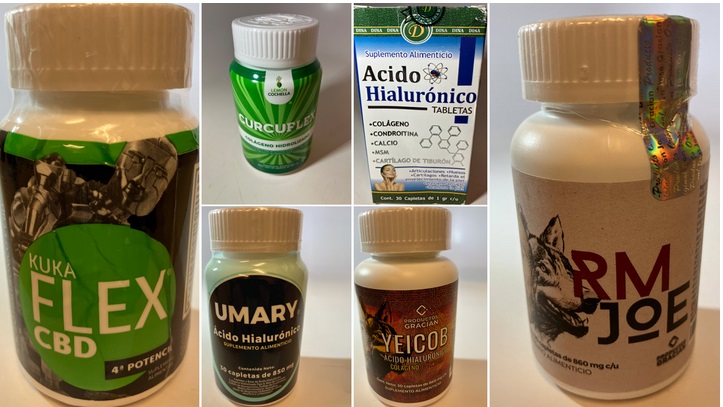
Image credit: FDA
Some supplements marketed as “hyaluronic acid” don’t just contain hyaluronic acid. According to a recent release from the U.S. Food and Drug Administration, several have been found to contain undisclosed prescription drugs—ingredients that consumers were never informed about, and that could pose serious health risks.
Hyaluronic acid itself isn’t controversial. It’s a naturally occurring molecule found throughout the body, particularly in the skin, joints, and eyes, where it helps retain water and maintain tissue lubrication. It also has legitimate medical uses: formulations regulated by the FDA are used in joint injections for osteoarthritis, as dermal fillers, and in ophthalmic procedures. But those evidence-based use with prescription brands are a long way from the over-the-counter supplements now being sold for skin health, joint pain, and general wellness and marketed as “hyaluronic acid”.
Over-the-counter, oral hyaluronic acid has much less evidence to support its use. While claimed to reduce wrinkles or relieve joint pain, the evidence supporting these claims is limited. Most studies are small, often poorly designed and report modest effects on subjective outcomes that may not translate into meaningful clinical benefit.
There’s also a basic biological question: oral hyaluronic acid may not be particularly bioavailable, meaning available in the body after ingestion. It is a large molecule that appears to be broken down during digestion, and there is limited evidence showing meaningful absorption into the bloodstream after oral consumption. Even when present in circulation, hyaluronic acid is cleared rapidly, making it uncertain how much, if any, could reach tissues or joints in an active form and meaningful amount.
Taken together, the clinical evidence does not instill much confidence. Even when studies report benefits, it remains unclear whether oral hyaluronic acid itself is responsible for the observed effects, or the result is a function of a trial of weak methodological quality. And if a supplement with questionable systemic activity appears to produce noticeable, even dramatic results, but inconsistently, it raises the possibility that something else in the product may be contributing.
The FDA release notes that some products marketed as hyaluronic acid supplements contained active pharmaceutical ingredients that were not disclosed on the label. As I have noted in past posts, supplements cannot be used safely or with evidence-based intent, or alongside other medications, if the label is inaccurate. And including products like non-steroidal anti inflammatory drugs, or corticosteroids is probably not an accident – it’s more likely there design, to make users feel better. And these ingredients have significant potential toxicities. Consumers could inadvertently put themselves at risk of side effects, drug interactions, allergic reactions, or even negatively affect existing medical conditions. Incredibly, if you look at the warnings for Umary, it appears the manufacturer keeps marketing an adulterated product and the FDA keeps warning about it, again and again.
By (legislative) design, dietary supplements marketed in the United States can be sold without meaningful evidence (or an evaluation) demonstrating safety, effectiveness, or even accurate labeling. In a competitive market where consumers expect noticeable effects, there is an obvious incentive to add substances that make products appear to “work,” even if that’s by other means.
Marketing and social media typically position supplements as gentle, natural, and inherently safe alternatives to medicines. But products sold with minimal evidence and limited regulatory oversight deserve our skepticism, particularly when they make dramatic claims or seem to work surprisingly well. (That statement arguably applies to all dietary supplements, not just hyaluronic acid products).
Unfortunately, when you buy a dietary supplement in the USA, you are not just accepting uncertainty about whether it works. You are also accepting some risk about what’s actually in the bottle.