

Category: Pharmaceuticals

Statins Are Better on JUPITER
Over 26 million Americans are taking statin drugs. Some people think they should be available over-the-counter without a prescription, and it has even been facetiously suggested that they should be added to our drinking water. The protective effect of statins in cardiovascular disease and in high-risk patients with high cholesterol levels is well established. But what about people with no heart disease...
Wyeth vs. Levine: Should Drug Label Standards Be Determined By Juries?
It is with some degree of trepidation that I enter the fray on the Wyeth vs. Levine case. I’ve been watching the media frenzy about the lawsuit with interest – mostly because (for the first time in a while) I think that the pharmaceutical company is in the right on this one – and that most journalists (and even medical journal editors)...
A natural product of his environment
I’m delighted to have the opportunity to join this outstanding group of medical professional bloggers in adding my natural products angle to the application of science-based medicine. With the exception of Dr. Gorski, who holds MD and PhD degrees, I believe I am the first “only a PhD” to be invited to SBM. However, I have spent much of my career training,...
/
October 14, 2008
Cholesterol Skeptics Strike Again
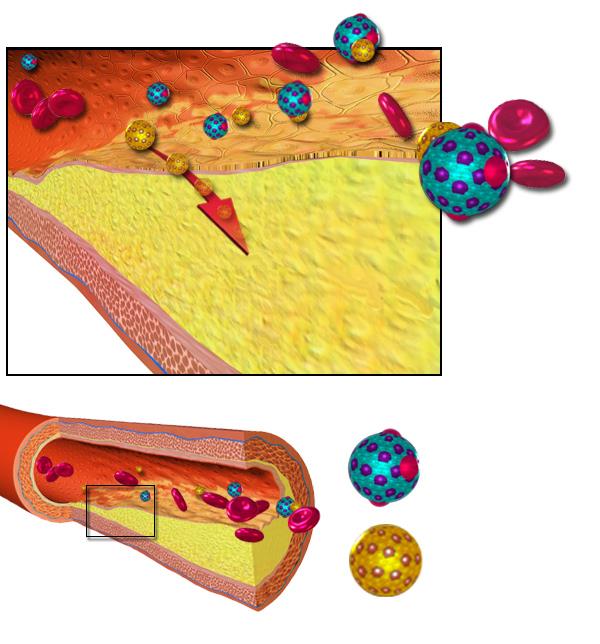
I’m really tired of arguing about cholesterol, but I feel obliged to stand up once more to defend science-based medicine from unfair calumny. Lewis Jones’s article “Cholesterol-shmesterol” in Skeptical Briefs (December 2007) included errors and misconceptions about cholesterol. It was a re-hash of the same kind of misinformation that is being spread by The International Network of Cholesterol Skeptics (THINCS) and that...
Threats to science-based medicine: When clinical trials for new drugs are designed by the marketing division
When the marketing division designs clinical trials, scientific medicine loses.
Polypharmacy – Is It Evidence-Based?
Polypharmacy essentially means taking too many pills. It’s a real problem, especially in the elderly. A family doctor gives an elderly patient one pill for diabetes, another for high blood pressure, and another to lower cholesterol. The patient sees a rheumatologist for his arthritis and gets arthritis pills. Then he sees a psychiatrist for depression and gets an antidepressant. He takes a...
Can Psychosis be Prevented?
I recently read an article in Discover magazine entitled “Stop the Madness.” It was about a new treatment program that allegedly can prevent schizophrenia and other forms of psychosis. I found it very disturbing. The PIER (Portland Identification and Early Referral) program was founded by a psychiatrist, Dr. William McFarlane, in Portland, Maine. It has recently expanded to 4 other US sites...
Forks in the road
It’s been decades since the onslaught of organized quackery began against science and reason. Although most physicians are still capable of reasoning, the percentage of medical graduates whose brains have been cleansed of that ability seems to have increased. Either the brains have been cleansed or they have learned to coexist with unreason and to use both functions simultaneously. The latter is...
/
June 12, 2008
Reading Medical Literature with a Critical Eye
A long time ago I read a study about what makes a good doctor. Some things you might think were important, like grades in medical school, were irrelevant. What correlated the best was the number of medical journals a doctor read. I don’t know whether that means good doctors read more journals or reading more journals makes a better doctor. One thing...

Hormone Replacement Therapy
The Women's Health Initiative revealed new risks about hormone replacement therapy, and now the media (and doctors) are scrambling to understand what it means. Of course, because this is medicine, it's complicated.