

Category: Acupuncture
Academic Consortium plan: force medical residents to practice integrative medicine
“Integrative medicine” (IM) is an ideological movement within medicine driven in large part by those whose livelihoods depend on its continued existence. This includes both those with positions in academic medicine and individual practitioners who use the IM brand to attract patients. Despite IM and its antecedents (alternative, complementary, alternative and complementary, complementary and integrative) having been around for about a quarter...
April Fool Cannot Surpass SCAM
It’s April Fools’ day in the US of A. One of the internet traditions is to come up with a story that is weird or unlikely, but not so weird or unlikely that it is not believable, in order to fool people that the story is real. I gave it the old SBM try, I really did, but I couldn’t do it....
Oregon Health & Science University SCAM Day
I was looking over a recent class catalog from my alma mater, University of Oregon. I see the Astronomy Department is having a day devoted to astrology, inviting astrologers to talk about their profession. And the Chemistry department is having alchemists give an overview on how to change base metals into gold. And, to green our energy, the Physics Department, where I...
Acupuncture for Coronary Artery Disease
I have spent the last 35 years mostly in acute care medicine. Spending my day in the hospital gives me the bias that we are fragile creatures who can die unexpectedly and easily. Much of the time we pull patients through, but I have a great respect for acute diseases. Over the years I have seen too many people wake up feeling...
Health Savings Accounts: a tax-sheltered way to pay for quackery
If you want money to pay for pseudoscience, but your pesky health insurance company is getting in the way, a Health Savings Account might be just the solution. And if the Health Savings Act of 2016, sponsored by the Big Supplement’s own Senator Orrin Hatch, becomes law, your opportunities will be greatly expanded. First, let’s take a look at Health Savings Accounts...
Curse Removal from the Annals. More Acupuncture Nonsense.
A short post this week. Last weekend was a busy call weekend and as I type this I am heading for Palm Springs for a long weekend of hiking in the desert. If there is no entry in 14 days, look for my bleached bones somewhere in Joshua Tree. Some observations about a recent article in the once-respected Annals of Internal Medicine,...
Pseudoscience sneaks into Ohio guidelines for non-drug pain treatment
Ohio recently issued Acute Pain Prescribing Guidelines as part of an effort to reduce the epidemic of opioid abuse and death from overdose. They were drafted under the auspices of the Governor’s Cabinet Opiate Action Team (GCOAT), assisted by medical organizations and other groups. The guidelines include recommendations for non-pharmacologic treatment, a typical feature of pain treatment guidelines and a worthy effort...
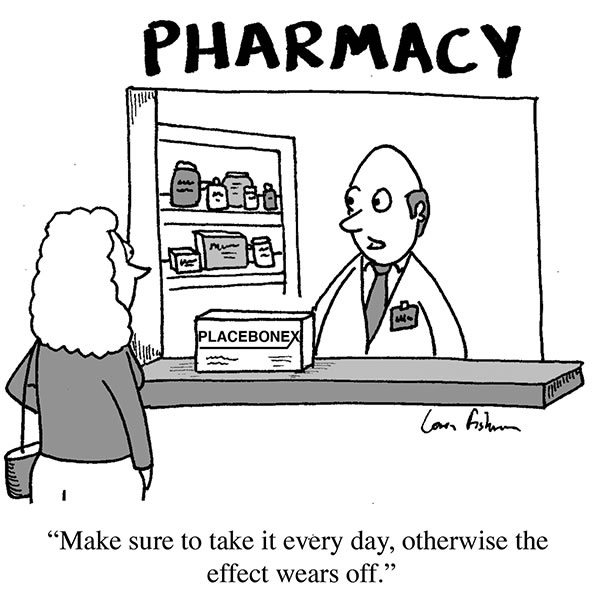
Is “harnessing the power of placebo” worthwhile to treat anything?
We frequently write about placebo effects here on Science-Based Medicine. The reason is simple. They are an important topic in medicine and, at least as importantly, understanding placebo effects is critical to understanding the exaggerated claims of advocates of “complementary and alternative medicine” (CAM), now more frequently called “integrative medicine” (i.e., integrating pseudoscience with science). Over the years, I (and, of course,...
Legislative Alchemy 2015: Another losing season for CAM practitioners
One of the main, but perhaps underappreciated, reasons quackery thrives in the United States is that the states legalize it by licensing practitioners of pseudoscience as health care providers. These practitioners are placed under the regulatory jurisdiction of, well, themselves. I call the whole deplorable process Legislative Alchemy, and you can see all posts on the topic here. It gives practitioners an...
Australian review finds no benefit to 17 natural therapies
A review by the Australian government has assessed the evidence for a variety of natural products covered by private health insurance. Their conclusion was that most lacked clear evidence of clinical efficacy. Hopefully this will end insurance coverage of seventeen different pseudosciences.