


On November 9, the FDA required the labeling of all Glucagon-Like Peptide-1 receptor agonists (GLP-1 RAs) to warn of the potential risk of nonarteritic anterior ischemic optic neuropathy (NAION).
It’s likely that you’re familiar with GLP-1 RAs, and there is a reasonable probability that you are taking one. In a Gallup survey, 11% of US adults reported taking a GLP-1 RA for weight loss. These peptide drugs were first developed and approved for type 2 diabetes, then for weight control in obesity, but now have added indications including reduction of cardiovascular disease and chronic kidney disease. There are numerous FDA-approved GLP-1 RAs with differing profiles of approved indications.
What is NAION?
Ischemic optic neuropathy refers to a condition affecting the optic nerve, marked by insufficient blood supply. NAION is often referred to as a stroke of the optic nerve. The optic nerve connects with the retina, exits the back of the eye, and runs to the optic chiasm, where the fibers from the optic nerve are sorted to the left and right sides of the brain. Anterior ischemic optic neuropathy refers to ischemia occurring near the origin of the optic nerve, at the back of the eye.
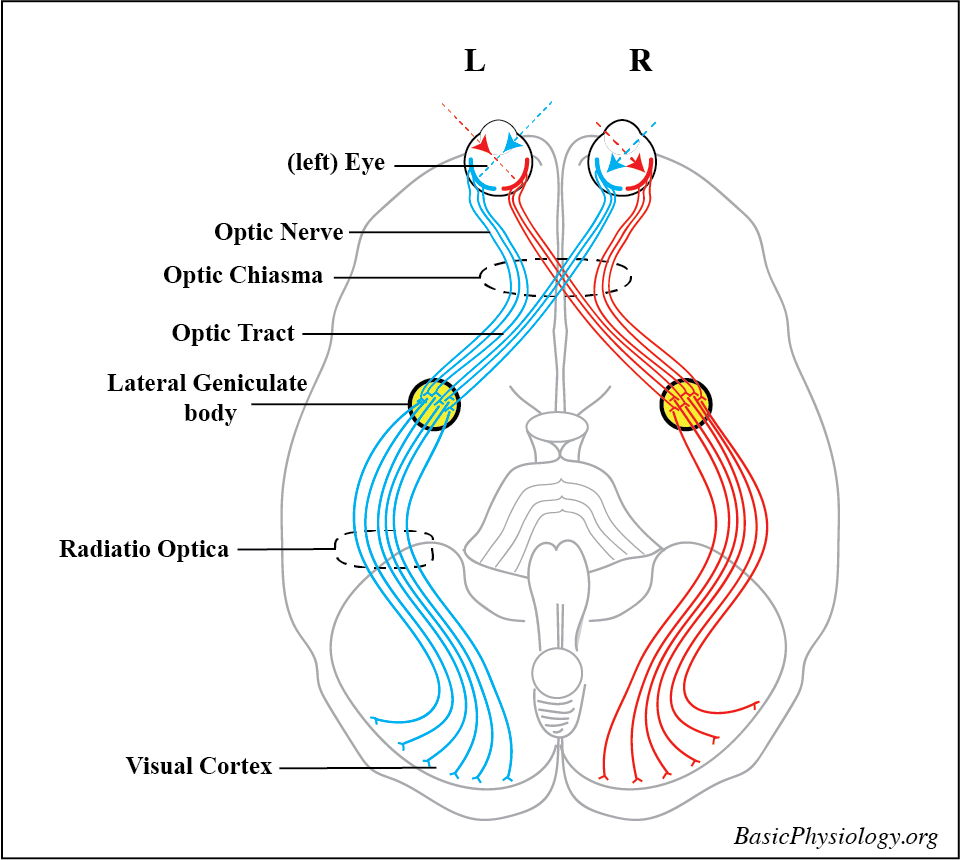
NAION usually begins suddenly with partial vision loss in one eye. Clinically, there is characteristic swelling of the optic nerve. There may be some recovery of vision, but often there is permanent impairment. Typically, only one eye is initially affected, but patients are at risk for future attacks in the other eye, or secondary events in the first eye. The adjective nonarteritic is added to distinguish the condition from arteritic ischemic optic neuropathy associated with giant cell arteritis, a life-threatening systemic inflammatory condition.
The evidence
Studying NAION in a patient population taking GLP-1 RAs is complicated. NAION is a relatively rare condition (2-10 per 100,000 per year in adults over 50). Increased age, hypertension, diabetes, cardiovascular disease, and obesity are known risk factors. Patients taking GLP-1 RAs are likely to have one or more risk factors. The American Academy of Ophthalmology published a very nice summary of NAION and GLP-1 RAs.
Investigation of a connection between GLP-1 RAs and NAION has evolved rapidly. The concern began with a cohort study from 2024. The study compared patients with type 2 diabetes and overweight/obese patients taking semaglutide vs. similar patients on other medications. They found a particularly high baseline risk of NAION, but patients taking the GLP-1 RA for diabetes were about 4 times more likely to suffer NAION than controls. Patients treated for obesity were over 7 times more likely.
There were important caveats to the study. It was done at a neuro-ophthalmology department in a tertiary care center. Neuro-ophthalmologists are the specialists to whom NAION cases are referred, so there was likely selection bias exaggerating the rate of the disease. Furthermore, the analysis was not able to fully adjust for the severity of the diabetes, so there could be an unrecognized confounder contributing to an elevated risk in one group. Semaglutide is the most widely studied of the GLP-1 RAs for a relationship to NAION.
Many other studies followed, including observational studies from various databases and registries, insurance claims databases, as well as meta-analyses from these observational studies. There have also been analyses and meta-analyses from clinical trial data of the various GLP-1 RAs. The results are messy and very much mixed. Many of the studies showed no increased risk, but several did show an increased risk. One outlier study found a decreased risk in patients with diabetes taking semaglutide.
What did the FDA say?
Based on a review of the data and their own meta-analyses, the FDA is requiring that a potential risk of NAION be added to the Warnings and Precautions section of all GLP-1 medications. One of their analyses estimated 6.4 cases per 100,000 per year taking GLP-1 RAs vs 3.8 per 100,000 per year in controls, a nearly 2-fold increase. If these numbers are correct, there would be 2.6 additional cases of NAION every year for every 100,000 people taking the drug, or 1 extra case for every 38,000 patient-years. The European Medicines Agency estimated a higher rate for semaglutide: 1 excess case per 10,000 patient-years.
What do other experts say?
The North American Neuro-Ophthalmology Society and the American Academy of Ophthalmology issued a consensus statement earlier this year. They conceded the uncertainty of the data but suggested there might be a 2-fold increase in the risk of NAION, adding that causality had not been determined and that further study was needed.
What to do?
If you are taking GLP-1 RAs and have questions about how these findings are relevant to you, speak with your doctors. Any sudden visual loss should be evaluated urgently by an eye doctor (good advice even if you are not taking a GLP-1 RA).
The European Medicines Agency has recommended that patients who develop NAION stop semaglutide medications. The North American Neuro-Ophthalmology Society and the American Academy of Ophthalmology did not agree with this as a universal recommendation.
Conclusion
The data regarding GLP-1 RAs have been accumulating rapidly. Although many virtues of these medications have been discovered, we should not be surprised that there are adverse effects as well. A causal relationship between these medications and NAION remains tenuous, but the FDA’s decision seems reasonable. The European Medicines Agency came to a similar decision and announced that NAION was a “very rare side effect” of semaglutide (but did not opine on other drugs in the GLP-1 RA class).
The potential risks of GLP-1 RAs must be weighed against the benefits. Even if a causal association between GLP-1 RAs and NAION is real, for those with diabetes, improved blood sugar control and weight loss associated with these medications may ultimately improve long-term vision outcomes and medical outcomes, in general. Rapidly accumulating data have shown many benefits of GLP-1 RAs on health and survival.
Long-term studies of GLP-1 RAs with attention to vision-related outcomes will be welcome.