


This is one of those weeks where I thought I needed a break from writing about the hellscape into which, thanks to the current administration, federal medical, public health, and biomedical research programs are fast descending. One of the favorite rhetorical techniques of quacks, cranks, and conspiracy theorists is to point to the conventional understanding of a phenomenon and label it a “hoax.” They then try to back up their claim, and hilarity ensues, at least to people who actually know something about the topic about which they are pontificating so confidently. I, of course, am a cancer surgeon, scientist, and researcher, which is why I had that reaction when I came across a Substack article by an anonymous blogger whom we’ve encountered before. The blogger is Unbekoming (misspelling apparently intentional, for whatever reason), and the post is entitled What is Metastasis? In this post, the blogger references an incredibly long Substack by someone named Jamie Andrews entitled The Metastasis Hoax (with a subtitle, hilariously, of “The Oncogenesis Myth.”). The idea behind both is, of course, that “everything you think you know about cancer metastasis is wrong” (and “They” are covering it up). What attracted me to this offal wasn’t so much the delightful reek of woo, but the reference to an experiment that I hadn’t been aware of that was so beautifully misinterpreted that I couldn’t resist.
Unfortunately, Andrews’ article is behind a Substack paywall, and I was not willing to pay to subscribe. That might actually be fortunate, because in the part that I could read, Andrews brags that it “is a very long article topping 140 pages that has taken months of research.” Let’s just say that, even as verbose as I am and as long a time as I take to produce my weekly contributions to SBM, I wasn’t willing to read 140 pages of intellectual masturbation for a single blog post, which made me willing to gamble that Unbekoming’s summary was accurate enough to use as a basis to explain why the ideas about cancer being promoted are the purest bullshit, based on some cherry-picked studies that are, admittedly, rather interesting, although two of them are over 40 years old.
So let’s start out. Unbekoming informs us in an introductory paragraph:
This essay is built on the investigative research of Jamie Andrews, whose July 2026 piece “The Metastasis Hoax,” published at the Virology Controls Studies Project, assembled the primary evidence examined here. Andrews surfaced the Tarin shunt studies, the PulMiCC trial, the Padera angiogenic failure, and the Paget–Hart–Fidler line. He identified the metastatic cascade as a component of establishment oncology that has never been rigorously tested, and framed the woman with the shunt as the perfect control experiment medicine designed against itself. The credit for the research file belongs to him. What follows organizes his findings within the terrain framework developed in What Is Cancer and extends the containment reading into systemic containment. Readers interested in the full case, including Andrews’ broader dismantling of the somatic mutation theory and his examination of oncogenesis, should read the original piece here. His work is well worth following and supporting.
As I said, I pass. I’m not going to spend my good hard-earned money on this stuff. I also note that Andrews calls his Substack the Virology Controls Studies Project. I perused a number of his other posts on his Substack, and, consistent with the vibe of the name, it turns out that he’s one of those cranks who denies that viruses are real. For example, he refers to Ebola as a “hoax” (because of course he does), claiming that it’s due to “poisoning” and not a virus. Note, however, why Unbekoming is attracted to these ideas: Terrain theory. You remember terrain theory, right? It’s a hypothesis promoted by Antoine Béchamps that for a time competed with Louis Pasteur’s germ theory of disease in the mid-19th century, before Pasteur’s ideas won out based on evidence. The basic idea of terrain theory was that the microorganisms weren’t the cause of disease, but rather a manifestation of a “terrain” favorable to disease. There was, of course, a germ of truth in the idea in that it is now well-accepted that problems like malnutrition and poor general health can make one more susceptible to infection and serious complications from infection, but Béchamps, as you might recall, claimed that the microorganisms arose from the diseased tissue, not that they invaded it. I’m not going to go into a lot of detail here, because I’ve written about terrain theory many times, as it is very attractive to quacks and believers in alternative medicine, especially antivaxxers. Indeed, terrain theory underlies a whole lot of what the “make America healthy again” (MAHA) movement preaches.

Yes, Jamie Andrews seems to be one of those “brave maverick” scientists who somehow has come to believe that he has discovered something that the entire worldwide scientific community cannot see and/or chooses to ignore. Never once does it occur to him that the reason he is not hailed with a Nobel Prize for falsifying virology is not because “They” don’t want you to know that virology is false, but rather because what he’s saying is nonsense tarted up with scientific language. Except that he’s not a scientist. He himself states that he has no formal scientific training but sells that as a strength, not a weakness, and he doesn’t do the experiments he describes himself. He appears to contract them out to contract research organizations (CROs), apparently not realizing that CROs just do what they are paid to do.
But I digress, although it is useful to know where someone who thinks he’s found major flaws in our understanding of cancer metastasis also thinks that he is successfully falsifying the entire field of virology. Instead, let’s look at what he says, admittedly filtered through the confident piffle published by Unbekoming.
What is metastasis?
Before I move on to the woo, it’s useful to briefly explain what cancer metastasis is (and isn’t) from a science-based perspective. In brief, cancer metastasis is the process by which cancer cells can spread beyond the primary tumor to implant in other organs and start growing secondary tumors, these secondary tumors being called metastases or metastatic deposits. The vast majority of patients with cancer do not die because of the growth of their primary tumor (although a minority do). Rather, they die from metastases, and in tumors arising from solid organs (e.g., colon, breast, etc.) metastatic disease beyond the immediate lymph nodes that drain the organ indicates incurability, which is why cancer with such metastases is usually considered stage 4, the highest stage on most cancer staging systems. There are occasional exceptions; for instance, colorectal cancer that has metastasized to the liver can sometimes be treated for long-term survival (“cure”) through the surgical extirpation of the liver metastases along with the primary tumor, but for the most part distant metastases (metastases beyond the regional lymph nodes) portend terminal disease.
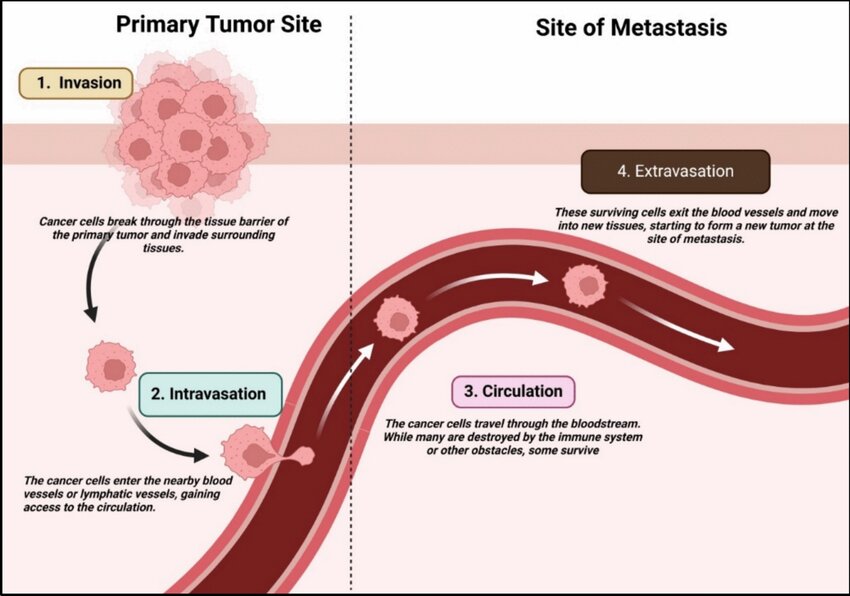
Metastasis is complicated, as you might imagine, and can occur mainly by two methods, hematogenous (via the bloodstream) and lymphatic (through the lymph nodes). Breast cancer, my specialty, is notorious for being able to spread via both mechanisms, usually spreading first to the axillary lymph nodes (under the arm). I could get into all the varying models of breast cancer metastasis, dating back to Sir William Halsted, who hypothesized a very systematic, orderly model for how breast cancer spreads, first to the regional lymph nodes and then hematogenously to distant organs, and all the way up to Bernard Fisher, who proposed that breast cancer is metastatic at diagnosis, which is why surgery alone is often not enough to cure the patient. However, such a discussion is beyond the scope of this post. Suffice to say that hematogenous spread and lymphatic spread are the two main methods of cancer metastasis. Here’s a diagram summarizing hematogenous metastasis:
Here’s a similar diagram for lymphatic metastasis:
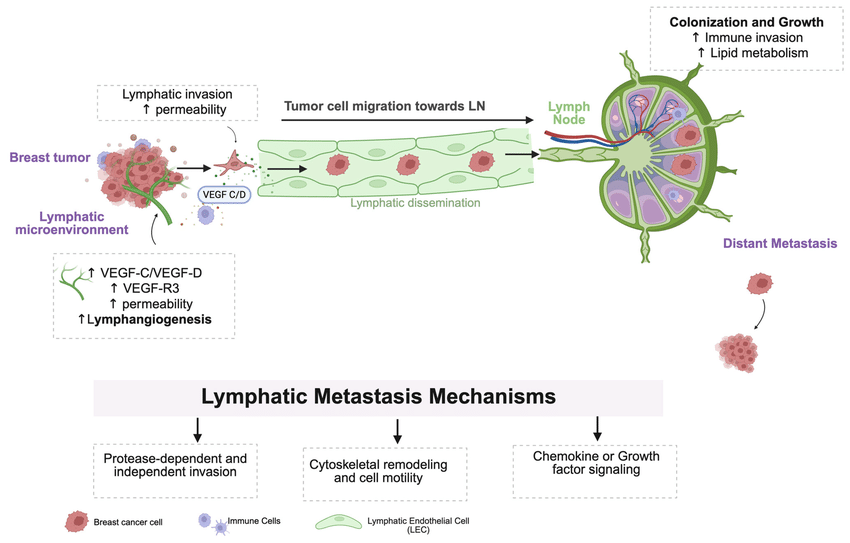
Here’s the thing: While we by no means understand everything about cancer metastasis and the metastatic cascade, we do know the main steps and, in some cases, quite a lot about how each step comes about. There are thousands upon thousands of research and clinical studies on this phenomenon, the goal being to seek points where the process can be targeted and interrupted in order to treat the cancer. If you don’t believe me, here are a couple of good review articles:
- Fares, J., Fares, M.Y., Khachfe, H.H. et al. Molecular principles of metastasis: a hallmark of cancer revisited. Sig Transduct Target Ther 5, 28 (2020). https://doi.org/10.1038/s41392-020-0134-x.
- Dai, X., Xi, M., & Li, J. Cancer metastasis: molecular mechanisms and therapeutic interventions. Mol Biomed 6, 20 (2025). https://doi.org/10.1186/s43556-025-00261-y
- Lambert AW, Zhang Y, Weinberg RA. Cell-intrinsic and microenvironmental determinants of metastatic colonization. Nat Cell Biol. 2024 May;26(5):687-697. doi: 10.1038/s41556-024-01409-8. Epub 2024 May 7. doi: 10.1038/s41556-024-01458-z.
I can find more easily, but these are good ones to start with. The idea is that, even though the metastatic cascade is not yet well understood, we do know a hell of a lot about its general outline and steps, as well as a lot about certain specific aspects of it. Naturally, Unbekoming and Andrews want you to think that we know nothing and that everything we do know is wrong, because that’s how cranks work. Let’s dig in.
The woman with the shunt
Unbekoming is very much impressed with studies published in the early 1980s about a woman with liver cancer and a peritoneovenous shunt, which led to an autopsy series of patients with liver cancer and these sorts of shunts that failed to find a lot of distant metastatic disease in these patients, and they begin their “revelations” thusly:
A woman with advanced cancer lived twenty-seven months with a device pumping viable, clonogenic tumor cells continuously into her jugular vein. At autopsy: no established metastases in any organ.¹
The device is a peritoneovenous shunt. It was designed in the 1970s to relieve malignant ascites, the fluid buildup that accompanies late-stage cancer. Fluid drains from the peritoneal cavity through a subcutaneous catheter and returns to the venous circulation. In patients with cancer, that fluid contains large numbers of live tumor cells. The shunt runs those cells directly into the bloodstream, continuously, for as long as the device is in place.
If the metastatic cascade is a real biological process, this is the most efficient method ever devised for producing distant metastases. Live cancer cells enter the blood at rates that dwarf any biological shedding from a primary tumor. There is no need to explain intravasation (the cell’s supposed entry into a blood vessel); the shunt performs it mechanically. Every step of what medicine calls the cascade, after entry into the circulation, is available for study, in humans, over months.
Again, these two studies are over 40 years old and by only one scientist. That doesn’t necessarily invalidate them, but whenever I see such old studies being so selectively cited, I always wonder what the newer literature says. First, however, let’s look at the actual studies (1, 2). First, understand what this sort of shunt does. Patients with liver failure, from whatever cause, frequently develop ascites; that is, fluid in the abdomen, often several liters. A peritoneovenous shunt basically has one end open in the peritoneal cavity, where the fluid is accumulating, and the other end in a major blood vessel, usually the internal jugular vein, with a one-way valve to prevent backflow. This provides a route for the fluid in the abdomen to flow into the bloodstream, with relief of the ascites. There are also valves to prevent this. Here’s a schematic:
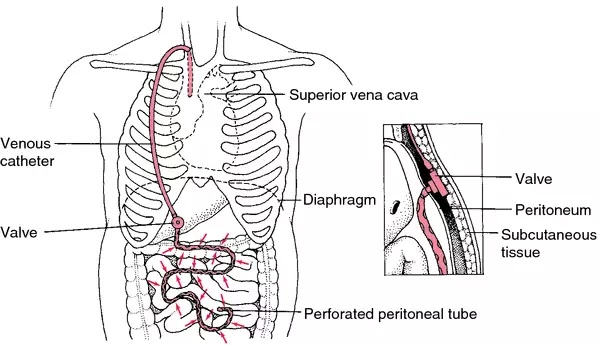
There are lots of problems with these shunts, not the least of which is their tendency to get clogged with protein from the ascites, but they are effective for relieving ascites in patients with severe liver failure, whatever the cause.
But back to the experiment referenced by Unbekoming and Andrews:
D.M. Tarin and colleagues followed twenty-nine such patients and performed autopsies on fifteen. Findings were published in two 1984 papers, one in the British Medical Journal and one in Cancer Research.¹,² The results have never been meaningfully addressed by the field they undermine.
Fourteen patients in the BMJ report died from cancer. Eight had no hematogenous metastases at autopsy. In the six who did have secondary tumors, no debilitating large lesions could be attributed to the shunt. All fourteen died from the consequences of local abdominal tumor growth. The authors’ own summary: “peritoneovenous shunting does not result in the establishment of clinically important haematogenous metastases and… metastases do not necessarily develop even when large numbers of viable tumour cells regularly enter the blood.”²
One case is especially difficult to reconcile with the cascade model. A patient in the fourteen-person cohort had extensive hepatic and spinal metastases at the time of shunt insertion. Those tumors continued to grow. But despite months of viable cancer cells being infused directly into her jugular vein, “no secondary tumour deposits or even isolated tumour cells were found in the lungs or in any organ other than those colonised before the shunt was inserted.”²
Cells in blood. New tumors: none.
First off, contrary to what Unbekoming says, these papers were not “buried” or “ignored,” much less their results having failed to have been “meaningfully addressed by the field they undermine.” (Hint: The results did not undermine the field.) These two papers were, in fact, highly influential landmark studies that have been widely cited for over four decades.
Indeed, when I was searching for the links to these papers, that dratted unavoidable Google Gemini AI summary at the top of my search results helpfully informed me that the Cancer Research study was ” highly influential, classic study in cancer biology.” So I searched for the BMJ study, just to see what Gemini would say, and Gemini referred to it as a “classic study.” Far from being a forgotten and ignored set of clinical studies, the Tarin papers are considered landmark studies in the field precisely because they showed that there’s a lot more to the metastatic cascade than just cancer cells getting into the bloodstream, being carried along by the flow of blood, lodging in organs, and growing there. For one thing, the process is very inefficient, with a very tiny proportion of tumor cells able to dislodge from the primary tumor mass, extravasate into a blood vessel, survive being in the bloodstream, get out of the bloodstream, and set up shop in a distant organ. As this review article notes, these experiments provided powerful evidence for the “seed and soil” hypothesis of metastasis, in which metastasis is much more complicated than tumor cells spreading throughout the body in the bloodstream. They have to land in a suitable location that has the conditions necessary for them to spread, and those conditions tend to be specific to different kinds of tumor cells. Here, Unbekoming appears to be misrepresenting the cascade model as saying that tumor cells in the bloodstream are all that’s necessary for metastasis.
So how does Unbekoming interpret Tarin’s foundational observations in patients with shunts? If you thought that they’d latch onto terrain theory, you would be right:
The modern defense of the cascade points to circulating tumor cells. Liquid biopsies detect them, CTC [circulating tumor cell] counts correlate with disease progression, and the counts are used prognostically. The observation is real. The interpretation medicine places on it is not. Cells shed from primary tumors are a correlate of established cancer, indicating that the terrain in the primary site has already failed. They are a marker of what has already happened, not a mechanism of what happens next. The shunt data settles the direction of the arrow. Cells in the blood do not produce tumors at distant sites, regardless of concentration. The correlation between rising CTC counts and worsening disease tracks damage in the primary tumor, not seeding at other sites.
At least they admit that CTCs are real.
Note their interpretation, though. They take this four-decade-old result and conclude that cells in the blood do not produce tumors at distant sites, ignoring all the evidence that they can and do, to conclude that the reason cells are being shed from the primary tumor is because the “terrain at the primary site has failed,” whatever that means, inverting the observation that increases in CTC count correlate with disease progression from meaning that more cells are getting out to potentially produce metastases to argue that more cells getting out is because the “terrain” in the organ of the primary site is somehow “failing.”
Now here’s the funny thing. Later in the post, Unbekoming mentions Stephen Paget‘s work in the late 19th century. Paget was a British surgeon, and let’s just say that, so great were his influence and discoveries that there are several diseases named after him, such as Paget’s disease of the nipple, which is a manifestation of pre-invasive breast cancer. He also popularized the “seed and soil” hypothesis, arguing that metastasis isn’t random, that tumor cells grow preferentially in certain organs because they have a favorable microenvironment. Unbekoming describes his work accurately enough, but then concludes, oddly:
Paget was right about what he saw. The metaphor he chose has misled the field ever since. Take away the seed and hold the soil, and the tumors still appear in the compromised tissues. It is soil all the way down.
That’s right. Unbekoming seems to be claiming that you don’t need a tumor cell (the seed) to lodge in a tissue (the soil) for a metastasis to form, which we know is total nonsense. This appears to be what is meant by the “metastatic cascade” being wrong. In reality, though, Paget was among the first physicians, along with Ernst Fuchs, to recognize that certain tumors have a predilection for certain tissues, the specific tissues varying depending upon the specific tumor type. It is not even controversial that metastases require tumor cells to travel to distant sites. What is contested are the mechanisms. Yet Andrews and Unbekoming are trying to do just that.
Resecting metastases (usually) does not work?
After having made that nonsensical argument, Unbekoming pivots to another question: Can resection of metastases result in cure? As I said in the introduction, for the vast majority of solid tumors (one rare exception being testicular cancer), distant metastasis portends incurable disease leading to eventual death. To that I would add that surgically resecting metastatic disease is usually futile, which is why it is not often done for most solid malignancies. I’ll elaborate a bit later, but first let’s see what Unbekoming says about the issue:
If cells reaching distant sites do not cause tumors at those sites, then surgically removing tumors at those sites should not affect survival. The only randomized trial ever conducted on the surgical practice tested this directly.
Pulmonary metastasectomy is the surgical removal of tumors that have appeared in the lung after treatment of a primary tumor elsewhere. It is a major operation performed hundreds of thousands of times annually worldwide. The justification for the procedure is that untreated five-year survival for patients with lung metastases is “less than five percent.” Cutting the tumors out, the argument runs, is life-saving.
That justification had never been tested against a control group. It rested on retrospective comparisons: patients selected for surgery had better outcomes than patients not selected for surgery. The selected patients were younger, had fewer metastases, and better overall health. Comparing their outcomes was like comparing marathon runners to hospital inpatients and concluding that running shoes extend life.
To cut to the chase, this particular study failed to find a significant difference in survival in patients who underwent metastasectomy of their lung lesions. (Remember, too, that lung metastases had to be the only known site of metastasis for patients to be considered for surgery.) This is, of course, a complicated question, and there were a lot of valid criticisms of this particular trial, including that it was underpowered, accruing less than 20% of its planned accrual goals, which is reflected in the very wide confidence intervals in the outcomes of the two groups. Worse, this accrual was prolonged over several years, and the patient population was heterogeneous, varying widely in tumor biology. As is the case all too often in medicine, this trial didn’t really answer the question, leading many surgeons to rely on the previous retrospective and prospective data that came from clinical practice as the best measure they have. Basically, there’s a large body of retrospective literature supporting the practice versus one underpowered negative randomized controlled trial (RCT). In other words, the question remains unsettled,
Unsurprisingly, Unbekoming treats the resistance to the findings of the RCT as evidence that surgeons are all biased and that old results are all the result of selection bias, stating:
The belief that untreated survival is less than five percent had produced a generation of surgeons willing to cut tumors out of the lungs of thousands of patients per year. When those patients were finally studied against a control group, they lived about as long either way, and slightly longer without the surgery.
Not quite. My view is that resection of pulmonary-only metastases from colorectal cancer probably does not meaningfully prolong survival, based on my reading of the literature, but you know what Unbekoming forgot to mention? There is a case where metastasis resection is very well supported, and that is for liver metastases from colorectal cancer. Like the case of pulmonary metastases, there are no randomized RCTs testing resection vs. no resection of liver metastases. Nor will there likely ever be, because the corpus of non-RCT evidence has become so accepted, much of it pointing in the direction of the efficacy of eliminating hepatic disease in prolonging survival. The most recent Cochrane Review on the subject notes that “up to 50% of patients with colorectal cancer develop metastases of which half are isolated to the liver and 10% to 25% are eligible for resection” and that “if all disease is removed these patients have a 30% to 50% chance of survival at five years,” which is far greater than no treatment. Ultimately:
The authors conclude that local ablative therapies might be useful for the management of liver metastases, but more research is required to further evaluate the effects of these treatment options and their potential role in increasing disease-free survival and in decreasing recurrence rates.
Again, the question isn’t fully answered, but in the case of liver-only metastases, the non-RCT data point much more strongly to a benefit of resecting the metastases, if all can be removed safely. There’s also indirect evidence from actual RCTs suggesting that removal of all cancer in the liver prolongs survival. For example, the COLLISION trial tested thermal ablation versus surgical resection and found that the 5-year overall survival was ~51% for ablation vs. ~58% for resection (not significantly different), with fewer adverse events for ablation. These are very high five-year survivals. Then there’s the TransMet Trial, which tested liver transplantation versus chemotherapy alone for unresectable liver-only metastatic disease, which showed striking results. Five-year survival was 73% in the transplant group plus chemo versus 9% with chemo alone, very strong evidence that removing metastatic disease can result in prolonged survival, even if this trial did include only a very highly selected group of patients. No wonder Unbekoming ignored it to pivot to another issue, angiogenesis.
The angiogenic failure?
When I saw that Unbekoming was going to discuss tumor angiogenesis, I chuckled, mainly because studying tumor angiogenesis was my thing for a long time, dating back to when its importance was first reported in animal models by Judah Folkman in the mid-1990s, leading to the popular press prematurely declaring it a way to make cancer into a manageable chronic disease, like diabetes or hypertension.
For those unfamiliar with tumor angiogenesis, its importance was first characterized decades ago, when it was noted that, without a blood supply, tumor cells could not grow beyond a diameter that allowed oxygen and nutrients to diffuse into the center of the tumor mass. Consequently, most solid tumors turn on something dubbed an “angiogenic switch,” in which they start secreting peptides that stimulate the ingrowth of new blood vessels, a process called angiogenesis. Of course, angiogenesis is a normal physiological process critical in embryogenesis, organogenesis, and, of course, wound healing; cancer just hijacks it to funnel nutrients, as well as the oxygen necessary to utilize them, to itself in order to grow.
Once again, Unbekoming cherry-picks an example to try to claim that the metastatic cascade is bogus, citing a drug called bevacizumab (trade name Avastin), which is an angiogenesis inhibitor. Basically, bevacizumab is a humanized monoclonal antibody that binds to vascular endothelial growth factor (VEGF), a key peptide secreted by normal tissues and tumors that is a powerful stimulator of angiogenesis. Now here’s the thing. It doesn’t always work, which, to Unbekoming, apparently means that the metastatic cascade is bogus. First, it is noted:
The theoretical basis of the drug is that tumors cannot grow beyond a few millimeters without recruiting new vessels to supply oxygen and nutrients. Cut off vessel growth in tumors that have already established at secondary sites, and further growth is prevented.
This is accurate enough, but this is not; at least the interpretation of the scientific observation is not:
Padera and colleagues at Massachusetts General Hospital tested it directly against lymph node metastases.⁴ They compared samples from patients treated with bevacizumab against samples from patients who received no anti-angiogenesis therapy. Their finding: “no difference in blood vessel density within the metastatic nodes.”⁴ The drug did nothing.
The reason it did nothing turned out to be structural. Lymph node metastases do not grow by recruiting new blood vessels. They use the pre-existing vasculature of the node. The angiogenic step is not part of what actually happens when a tumor appears in a lymph node. Padera’s conclusion: “since lymph node metastases do not require the development of new blood vessels, antiangiogenic therapy will not inhibit lymphatic metastasis.”⁴
The drug was designed around a theoretical requirement of the cascade model. That requirement is not real. The drug fails at the specific site where its mechanism was supposed to apply.
Bevacizumab remains in wide use in oncology. Its regulatory approvals are not being revisited. The theoretical model that produced it continues to guide drug design. Padera’s finding demonstrates that the model’s predictions do not hold, even in the presence of a drug specifically designed to test them.
WTF?
Here’s the study. Yes, it basically finds pretty much what is described above. A key paragraph in the introduction reads:
We and others have previously shown that antiangiogenic therapy did not stop the seeding or growth of lymph node metastases (9,17,18), but no mechanism of failure has been determined. Nonsprouting angiogenesis mechanisms to sustain tumor growth, such as vessel co-option and intussusception, have been implicated in the growth of lung, liver, and brain metastases (19) and are thought to play a role in resistance to antiangiogenic therapy (20). Based on these findings, we hypothesized that early growth of lymph node metastases is not dependent on sprouting angiogenesis.
In other words, there is more than one mechanism of angiogenesis. VEGF stimulates what is known as sprouting angiogenesis, which involves, as the name implies, new vessels sprouting out of old vessels towards the source of the angiogenic stimulus. It was also known that antiangiogenic therapy didn’t stop the seeding or growth of lymph node metastases, likely because of other mechanisms of angiogenesis. There are actually more mechanisms of angiogenesis than that; so, rather than describing them all, I’ll let a figure do the talking:
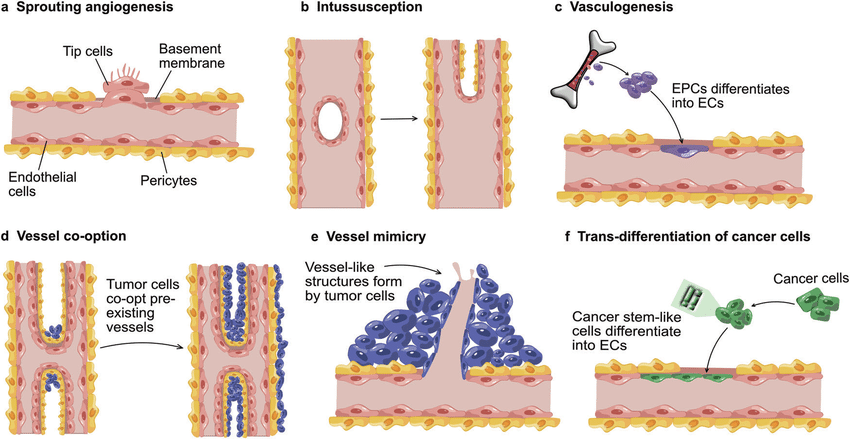
Nope. The fact that bevacizumab didn’t work to inhibit the growth of lymph node metastases is not evidence against the metastatic cascade.
Enter the quacks
The funny thing about Unbekoming’s take on tumor metastasis and the metastatic cascade is that it doesn’t limit itself to just “conventional” oncologists and cancer scientists. It takes on quacks as well. For example, Unbekoming mentions the “metabolic dissidents,” which apparently means cranks who have adopted the idea of a metabolic origin for cancer as the be-all and end-all, rejecting “mutation theory.” Of course, I’ve written about tumor metabolism and treatments that target it many times in the past. An appreciation of aberrant metabolism in tumor cells dates back to Otto Warburg’s observations in the late 1920s, but really took off about 15-20 years ago. What I like to say is that mutation and aberrant metabolism are not mutually exclusive. In any case, Unbekoming writes:
The metabolic dissidents of the last two decades have done real work. Thomas Seyfried spent years dismantling the somatic mutation theory. Nasha Winters brought Warburg’s findings to a general audience. Jane McLelland made a serious case for repurposed metabolic drugs against her own diagnosis. Paul Marik built a rigorous protocol around mitochondrial biochemistry. Their contribution to a field captured by a false paradigm has been substantial.
All four inherited the metastatic cascade without examining it.
See the claim here? These supposedly brave mavericks “questioned” mutation theory. I’ve written about most of them, in particular Paul Marik, one of the doctors who made the pivot from a COVID-19 quack to a cancer quack disparaging chemotherapy to sell his bogus treatments. I’ve also written about Thomas Seyfried, who, while not completely full of crap, does massively oversell his ketogenic diet as a treatment for cancer. (No, it does not beat chemotherapy for nearly all cancers.) I’ve also written about Jane McClellan before. She appears to be a standard “starve the cancer”-sort of quack who more recently added “repurposed drugs”—cough, cough, ivermectin—to her armamentarium. (Repurposed drugs are a favorite of Paul Marik, too.) I haven’t written about Nasha Winters before, but she is a naturopath who is big into terrain theory and dismisses you close-minded oncologists out there who miss patterns “when health is reduced to isolated parts.”
Now here’s the hilarious thing. Even these brave maverick quacks are deluded enough to believe the metastatic cascade:
The pattern is the same in each case. These are thinkers who broke with the establishment on the causal question (genetics versus metabolism) but adopted the establishment’s mechanism for the downstream phenomenon (metastasis). They rejected the genetic story of tumor formation. They kept the establishment’s story of tumor spread.
Because of course they did. They’re not as brilliant as Andrews. They weren’t as “skeptical”:
A more consistent application of the same skepticism the metabolic dissidents applied to the genetic story would have caught the cascade. The genetic theory of cancer was mistaken about causation because it treated a downstream correlate as an upstream cause: present-day mutations in tumor cells were taken as the origin of the tumor rather than as its consequence. The cascade model of metastasis makes the same error at a different level. Cells in the blood are the consequence of terrain failure at the primary site, not the cause of terrain failure at other sites.
Or maybe, instead of being wrong about both a genetic origin for cancer and the metastatic cascade, these quacks are only wrong about one. Let’s just put it this way, Unbekoming says this:
That single autopsy report, replicated across the twenty-nine patients in the Tarin cohorts, is the falsification of the cascade model. It is the falsification that PulMiCC confirms at the level of the randomized trial and that Padera confirms at the level of drug design. Paget saw the shape of the answer in 1889. Hart and Fidler confirmed it experimentally in 1980. The field carried on describing metastasis as cellular travel because the alternative account required abandoning too much of the surrounding framework.
No, none of these “falsified” the cascade model. To write as much just shows that Unbekoming doesn’t understand nearly as much as they think they do about cancer. This does make for a good “alternative” cancer conspiracy theory, though. “They” won’t abandon the standard view of how metastasis happens because “the alternative account required abandoning too much of the surrounding framework.” Well, yes, but scientists have abandoned such frameworks before when the evidence demanded it. No one claims it’s easy, but nowhere does Unbekoming make a compelling argument that the conventional view held at present about the metastatic cascade is so disastrously wrong. Cherry-picked examples that ignore lots of other data and literally decades of experimentation won’t do it.
Cancer is not the true disease? Here we go again
All of this leads Andrews and his admirer Unbekoming to land on a common quack trope, that cancer is not the real disease, but rather a manifestation of the body’s defense against some “toxic” insult:
If cells reaching distant sites is not the cause of secondary tumors, what is?
Cancer, in the terrain framing, is a containment response. The primary tumor is the body walling off a region of tissue whose cellular machinery has failed and cannot be repaired while the causal insult persists. Structured water in the cytoplasm has broken down. This is the organized gel phase that runs cellular chemistry, and its collapse strips the cell of the medium in which its machinery operates. Zeta potential in the local capillary bed has collapsed alongside it. This is the electrical charge that keeps blood cells separated from each other and from vessel walls. Its loss produces capillary sludging that starves the surrounding cells of oxygen and forces them into fermentation. Respiration in the mitochondria of the affected cells has been overwhelmed. Cells have shifted into fermentation as a survival response. The body cannot restore the tissue while whatever damaged it continues to arrive, so it walls the region off. That is what medicine sees on the scan and calls a tumor.
Yes, it’s Robert O. Young all over again, claiming that the tumor is the body’s response to cells “spoiled by acid.” It’s the German New Medicine, which claims that tumors are a response to past trauma that causes a “Hamer body” that is walled off by the body as a defensive response. It’s Andreas Moritz all over again, claiming that cancer is a “survival mechanism” based on the “wisdom of the body.” As I wrote about a month and a half ago, according to this cancer quackery, the tumor is what is keeping you alive. The only difference here is that Andrews and Unbekoming extend the idea to metastases:
Paget’s seed-and-soil formulation is a hundred-and-thirty-seven-year-old approximation of something more direct. There are no seeds. There is only soil, in varying stages of failure, producing containment walls in the tissues whose terrain has collapsed. The word metastasis, as medicine uses it, describes a sequence of events that has not been observed to occur. What the word labels is a real phenomenon: additional tumors appear at additional sites over time. But the mechanism medicine assigns to the phenomenon is not the mechanism at work.
Andrews goes even further in his Substack article, claiming that cancer is “similar to a ‘virus’ in that it does not exist as specified by the mainstream medical view of what they are” and that “Cancer is a cellular imbalance mislabeled as a Genetic mutation that arises from a similar imbalance of the terrain of the whole,” pontificating in the part of his article not behind a paywall:
Once you fully realize the above information, you will understand that looking for a “cure” for Cancer is the wrong way of dealing with a case of imbalance. Certainly for cutting, burning and chemically poisoning ones self, which is the Allopathic way is never going to be beneficial to health. But more than that, to think you can take some sort of pill/chemical/ food stuff said to contain a chemical is also in my opinion not the way to make a change to a disease , that as we laid out above, is caused by environment, diet and lifestyle. The only way to deal with a disease caused by environment, diet and lifestyle is to… you guessed it… change your environment, diet and lifestyle. If you have been following along, the next bit should be an extension of logic in that these things, for the sake of balance, should be happening on a similar time frame as each other, a Ying to the Yang shall we put it: 3 decades of heavy drinking, smoking, processed food diets and pharma pill popping obviously cannot be undone by 3 months of cutting down on takeaways and quitting smoking whilst doing chemo (mustard gas).
This is the sort of idea that can sound plausible if (1) you don’t know very much about cancer and (2) don’t think about it very hard. After all, how would this model explain observations that the genome of metastatic tumor deposits and the accumulation of mutations in them can be mapped back to the primary tumor, showing how the tumor evolved into heterogeneity and that a subset of those cells spread to distant organs? We can literally trace where cells spread in animal models using labeled cells, and in human models we can use a variety of techniques to demonstrate the relationship of metastases to their primary tumors.
Also, treat cancer by changing your lifestyle? We already know that that doesn’t work. Even if everything Andrews writes is true, even by his own model, he’s talking nonsense pulled out of his nether regions. Remember that example of cancer being due to three decades of heavy drinking, smoking, and processed food diets not being able to be undone by three months of lifestyle changes and chemotherapy? The exact same “logic” applies to his idea that lifestyle changes can cure cancer. Under the “conventional” view of carcinogenesis and metastasis, cancer is a very late development. It’s the end stage of the process. Andrews seems to be claiming that some sort of terrain-targeted naturopathic quick fix can cure cancer, which is just as ridiculous a contention as his caricature of what modern cancer science and oncology currently understand as the nature of cancer. It’s serious woo, with no real applicability to treating and curing cancer. Even more amusing, no matter how much he tries to gussy it up as a radical new understanding of cancer, he’s really just dipping into 150-year-old terrain theory and tarting it up with all sorts of handwaving about tumor metabolism and microenvironment.
Contrary to nonsense like this being peddled by Anderson and Unbekoming, we now know a lot about how cancer originates, progresses, evades the immune system, and ultimately kills its host if left untreated. We know a lot about how it infiltrates blood vessels and lymph vessels, spreads via blood vessels and lymphatic vessels, lodges at distant sites, evades the immune system, and ultimately grows to kill the patient. Unfortunately, we do not know enough to come close to curing all cancers, and some cancers (e.g., pancreatic cancer) remain deadly and difficult to treat. We do, however, know enough that the death rate from cancer has been steadily declining for the last three and a half decades, having declined by approximately 34% since 1991. That’s what science can do.
What can Andrews and Unbekoming do? They can write reams and reams of plausible-sounding bullshit about cancer.