

Tag: complementary and alternative medicine
Bravewell Bimbo Eruptions
This is yet another response to the recent “Integrative Medicine in America” report published by the Bravewell Collaborative. Drs. Novella and Gorski have already given that report its due, so I won’t repeat the background information. Inevitably, I’ll cover some of the same points, but I’ll also try to emphasize a few that stand out to me. Most of these have been...
The Bravewell Collaborative maps the state of “integrative medicine” in the U.S., or: Survey says, “Hop on the bandwagon of ‘integrative medicine’!” (2012 Edition)
Earlier today, Steve discussed a new report hot off the presses (metaphorically speaking, given that it’s been published online) from the Bravewell Collaborative. Naturally, given the importance of the issue, I couldn’t resist jumping in myself, but before you read the blather I have to lay down, you really should read what Steve wrote about it. It’s that good. (Also, he’s our...
“Obama Promises $156 Million to Alzheimer’s…But where will the money come from?” That’s easy: the NCCAM!
The quoted language above is part of the headline of this story in today’s The Scientist: Citing the rising tide of Americans with Alzheimer’s—projections suggest 10 million people will be afflicted by 2050—the Obama administration and top National Institutes of Health officials are taking action. On February 7, they announced that they will add an additional $80 million to the 2013 NIH...
Does thinking make it so? CAM placebo fantasy versus scientific reality
Last week, I discussed a rather execrable study. Actually, the study itself wasn’t so execrable, at least not in its design, which was a fairly straightforward three-arm randomized clinical trial. Rather it was the interpretation of the study’s results that was execrable. In brief, the authors tested an “energy healing” modality known as “energy chelation” versus a placebo (sham “energy chelation”) and...
What is Science?
Consider these statements: …there is an evidence base for biofield therapies. (citing the Cochrane Review of Touch Therapies) The larger issue is what constitutes “pseudoscience” and what information is worthy of dissemination to the public. Should the data from our well conducted, rigorous, randomized controlled trial [of ‘biofield healing’] be dismissed because the mechanisms are unknown or because some scientists do not...
NIH Director Francis Collins doesn’t understand the problem with CAM
As the sole cancer surgeon among our stable of Science-Based Medicine (SBM) bloggers, I’m probably the most irritated at the infiltration of pseudoscience into academia (or, as we sometimes like to call it, quackademic medicine) in the realm of cancer. Part of the reason, of course, is that cancer is so common and that the consequences of adding pseudoscience to cancer therapy...
The New England Journal of Medicine Sinks a Bit Lower
I suppose it was bound to happen, but it still rankles. Here is the back cover of last week’s issue of the decreasingly prestigious New England Journal of Medicine: Here’s the front cover: It’s the 200th Anniversary issue, no less. Some might protest that ‘probiotics’—live bacteria of ‘good’ varieties, as far as the gut is concerned—aren’t all that implausible, and that...
Integrative Medicine: “Patient-Centered Care” is the new Medical Paternalism
Integrative Pitchmen Several of us have written about how contemporary quacks have artfully pitched their wares to a higherbrow market than their predecessors were accustomed to, back in the day. Through clever packaging,* quacks today can reasonably hope to become professors at prestigious medical schools, to control and receive substantial grant money from the NIH, to preside over reviews for the Cochrane...
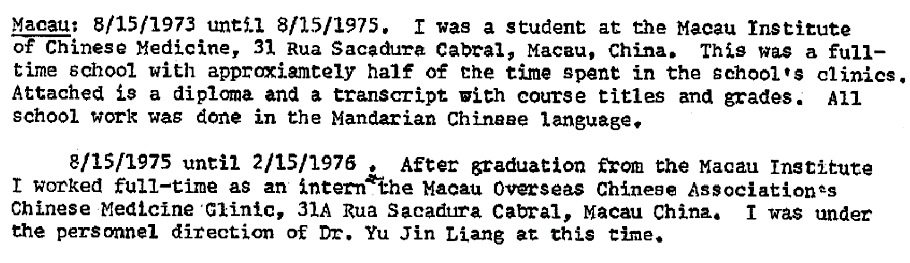
Dummy Medicine, Dummy Doctors, and a Dummy Degree, Part 2.3: Harvard Medical School and the Curious Case of Ted Kaptchuk, OMD (concluded)
A Loose End In the last post I wondered if Ted Kaptchuk, when he wrote the article titled “Effect of interpretive bias on clinical research,” had understood this implication of Bayes’s Theorem: that interpretations of most scientific investigations are exercises in inverse probability, and thus cannot logically be done without consideration of knowledge external to the investigation in question. I argued that...
Dummy Medicine, Dummy Doctors, and a Dummy Degree, Part 2.2: Harvard Medical School and the Curious Case of Ted Kaptchuk, OMD (cont. again)
“Strong Medicine”: Ted Kaptchuk and the Powerful Placebo At the beginning of the first edition of The Web that has no Weaver, published in 1983, author Ted Kaptchuk portended his eventual academic interest in the placebo: A story is told in China about a peasant who had worked as a maintenance man in a newly established Western missionary hospital. When he retired...