

Supplements and cancer prevention
The bloggers here have been very critical of a law passed nearly 20 years ago, commonly referred to as the DSHEA of 1994. The abbreviation DSHEA stands for about as Orwellian a name for a law as I can imagine: the Dietary Supplement Health and Education Act. Of course, as we’ve pointed out time and time again, the DSHEA is not about...
The problem with preclinical research? Or: A former pharma exec discovers the nature of science
If there’s one thing about quacks, it’s that they are profoundly hostile to science. Actually, they have a seriously mixed up view of science in that they hate it because it doesn’t support what they believe. Yet at the same time they very much crave the imprimatur that science provides. When science tells them they are wrong, they therefore often try to...

Cancer care in the U.S. versus Europe: Is more necessarily better?
The U.S. is widely known to have the highest health care expenditures per capita in the world, and not just by a little, but by a lot. I’m not going to go into the reasons for this so much, other than to point out that how to rein in these costs has long been a flashpoint for debate. Indeed, most of the...
Why haven’t we cured cancer yet? (Revisited): Personalized medicine versus evolution
About a year ago, I addressed what might seem to the average reader to be a very simple question: Why haven’t we cured cancer yet? As I pointed out at the time, it’s a question that I sometimes even ask myself, particularly given that cancer has touched my life. Three years ago, my mother-in-law died of a particularly nasty form of breast...
Autism prevalence: Now estimated to be one in 88, and the antivaccine movement goes wild
Editor’s Note: Some of you might have seen this before, but it’s an important (and timely) enough topic that I figure it’s worth exposing to a different audience. It’s been updated and edited to style for SBM. Enjoy. If there’s one thing that I’ve learned that I can always—and I do mean always—rely on from the antivaccine movement, it’s that its members...
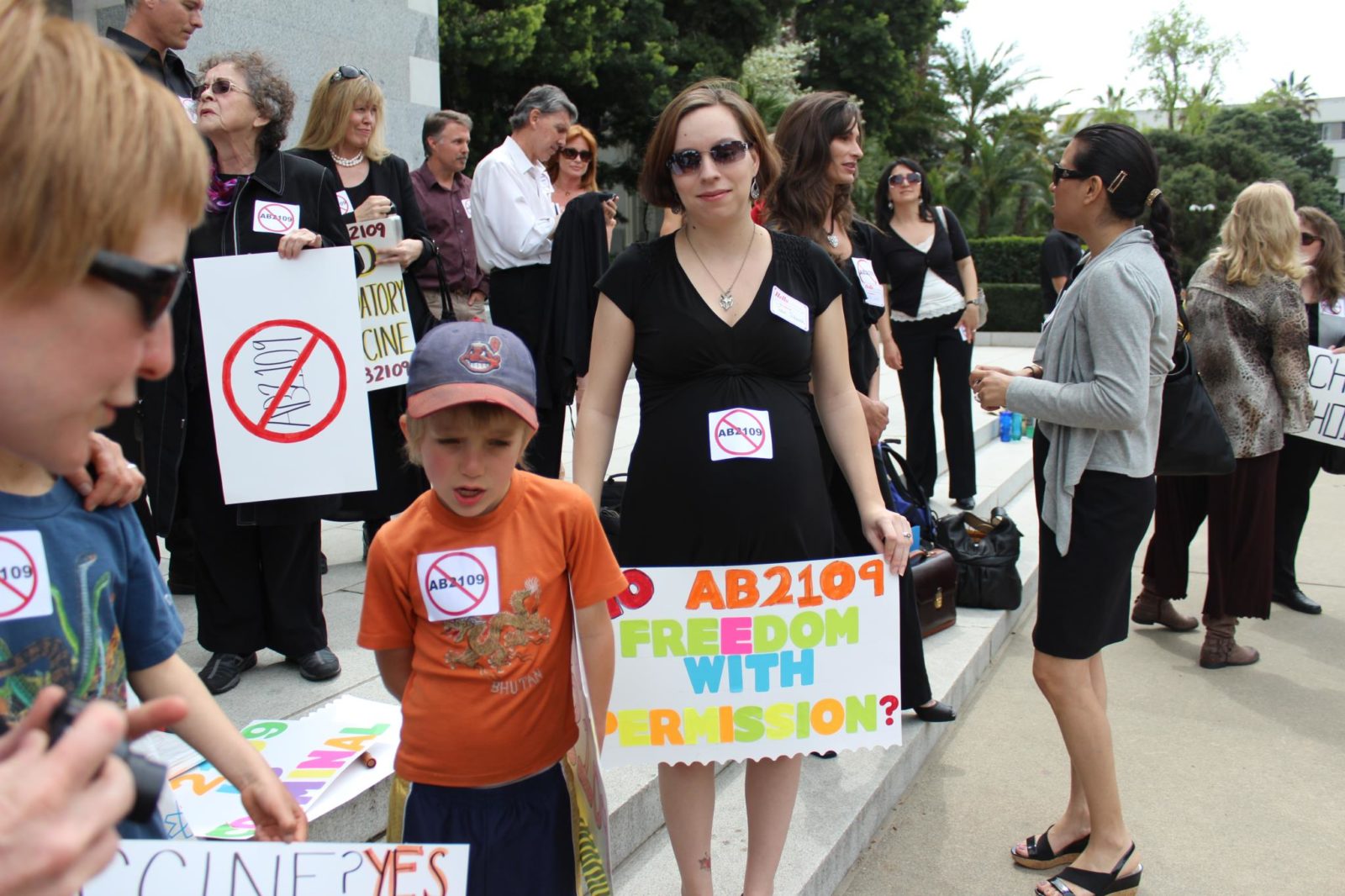
California Bill AB 2109: The Antivaccine Movement Attacks School Vaccine Mandates Again
AB 2109 in California makes it harder for parents to claim personal belief exemptions to school vaccine requirements by requiring that parents visit a physician or other enumerated health care provider to counsel them on the risks of leaving their child unvaccinated, thus providing informed consent. Not surprisingly, antivaxers do not like it.
Keeping the customer satisfied
These days patient satisfaction is becoming more and more important in judging how well hospitals and physicians are doing. Indeed, Medicare reimbursements are linked in part to a patient satisfaction survey administered by the government. The underlying assumption is that patient satisfaction correlates with high quality care, But is that true? I have my doubts. Indeed, there is evidence that, at best,...
An antivaccine tale of two legal actions
I don’t know what it is about the beginning of a year. I don’t know if it’s confirmation bias or real, but it sure seems that something big happens early every year in the antivaccine world. Consider. As I pointed out back in February 2009, in rapid succession Brian Deer reported that Andrew Wakefield had not only had undisclosed conflicts of interest...
Help a reader out: Abstracts that misrepresent the content of the paper
Earlier this week, a reader of ours wrote to Steve and me with a request: First off, I just want to say thank you for everything you gentlemen do. I find that your sites are extremely helpful when trying to figure out what level of information is BS, and what is real. In short, I was wondering if either of you two...
A surprising article about “integrative” medicine in The New England Journal of Medicine vs. “patient-centered” care
The New England Journal of Medicine (NEJM) is published on Thursdays. I mention this because this is one of the rare times where my owning Mondays on this blog tends to be a rather large advantage. Fridays are rotated between two or three different bloggers, and, as awesome as they are as writers, bloggers, and friends, they don’t possess the rabbit-like speed...