


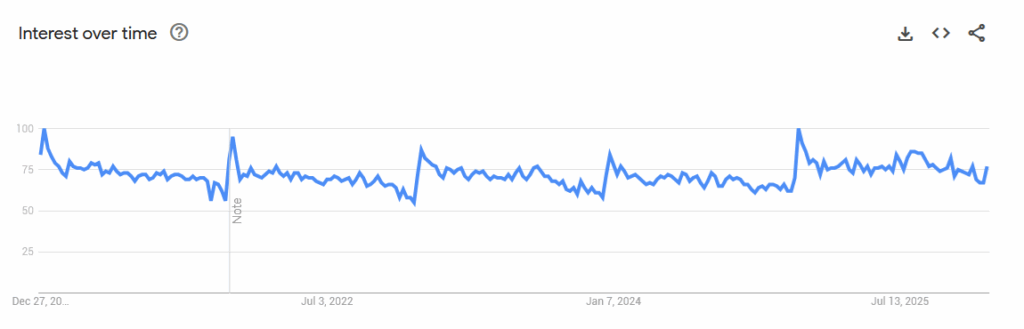
Google Search Trends for the word “detox” show a consistent pattern: There is a surge of interest every January in ridding our lives and bodies of toxins. The years pass, but the belief stays the same: Your body has accumulated hidden toxins that can be “flushed out” with the right action, supplement, device, or protocol. While the core idea of detox remains unchanged, the forms it takes are constantly evolving – adapting to current fears and trends. In the past, I’ve blogged about Candida cleanses, coffee colon flushes, and vitamin drips. In 2026, trends have shifted toward microplastics detox, microbiome “resets,” longevity medicine, and data-driven wellness dashboards, all dressed in the veneer of science. Let’s take a look at what’s new, how it’s recycled, and why your liver and kidneys remain the unsung heroes of detoxification.
The Persistent Myth of Detoxification
There’s a reason we fall for the marketing of detoxification — we seem hardwired to believe we need it. Purification rituals date back as far as recorded history. The idea that we’re somehow poisoning ourselves and we need to atone for our sins seems part of human nature. Detox programs ranging from bloodletting, purging and enemas to more modern juice cleanses and extreme vitamin regimens all stem from this belief that our bodies are filled with toxins.
Before we had a working understanding of biology, chemistry, and physiology, it was perhaps understandable that rituals emerged to offer spiritual or physical cleansing. Illness was mysterious and the idea of purging unseen harms had intuitive appeal. What’s harder to justify is the persistence of these beliefs in an era where we understand how the body actually handles waste and toxic exposures.
Our liver, kidneys, lungs, and skin are extraordinarily effective at neutralizing, transforming, and eliminating substances we encounter in everyday life. For most people, these systems do all the heavy lifting of detoxification without any help from supplements, saunas, or special protocols. They do not need activation, support, or “boosting”.
Real Detox isn’t Elective
When the term “detox” is used in legitimate medical settings, it has a very narrow and specific meaning. It refers to the treatment of dangerous levels of drugs, alcohol, or poisons, including certain heavy metals. These are medical emergencies or clearly defined clinical conditions, managed in hospitals using evidence-based interventions. Detoxification, in this context, is not a lifestyle choice, a wellness goal, or something selected from a menu of alternative treatments or purchased off a pharmacy shelf.
What has changed over time is how the wellness industry markets detoxification. Where detox once focused on obvious gimmicks like foot baths or juice fasts, in 2026, the same idea is sold in more scientific language, appealing to concerns about aging, environmental pollutants, and microbiome health. Today, detoxification is marketed as precise, personalized solutions. However, the central myth of detox remains unchanged: your body cannot be trusted to do what it already does exceedingly well.
Microplastics Are The New Candida
Headlines about plastic particles being detected in blood, lungs, placentas, and other tissues have been rapidly assimilated into the wellness ecosystem. Microplastics are tiny plastic particles that come from the breakdown of larger plastic pieces. Because microplastics are ubiquitous, persistent and easily dispersed, they are found in water, food and air – and our bodies. While their impact on human health continues to be studied, the message from wellness entrepreneurs has been simplified to: Plastics are accumulating inside you, and are causing you harm.
This is the perfect setting for detox marketing. Much like the Candida detox kits popular 20 years ago, supplements, binders, sauna protocols, and “plastic detox” programs now claim to remove microplastics (instead of yeast) from the body or reduce an individual’s “plastic burden.” Some businesses and clinics offer testing panels that purport to measure retained plastics, despite the absence of validated methods to do so in a clinically meaningful way. Unlike Candida, microplastics are a real environmental and health issue worthy of study. And that’s happening. But, just like older detox trends, a real scientific issue is already being used to justify claims that go far beyond the evidence.
What’s missing from the marketing claims is any evidence that these detox interventions actually work. Detecting microplastics in human tissues does not automatically imply that they can be selectively removed, or that proposed detox strategies meaningfully alter health outcomes. There is no credible evidence that supplements, saunas, chelation-like binders, or dietary protocols can “flush” plastics from the body. The leap to offering a personal detox solution is marketing, not evidence-based medicine.
The microplastics detox narrative we’re seeing also exploiting a familiar (and recurrent) misunderstanding of toxicology: the assumption that detection equals danger, and that identification necessitates purging. In reality, exposure does not make toxicity a certainty. The body’s handling of microplastics is far more complex than the simple input-output model wellness entrepreneurs use. We can see in the detox marketing companies will substitute fear-based marketing where they should be doing the hard science, and promoting unproven products rather than providing evidence their intervention actually does anything.
Microplastics are a legitimate environmental issue and an active area of health research. What they are not is a justification for consumer-driven detox. They’re an invisible villain being used to sell products and services.
Longevity Medicine and the Reinvention of “Toxic Load”
One of the more revealing shifts in detox culture I have observed is that the word itself may be avoided. While the desire to live longer and live better is not new, the term “longevity medicine” is a marketing term you’ll see that describes approaches to slow age‑related decline and extend healthy lifespans. While it’s not a formally recognized medical specialty, you can think of it as a range of interventions, from scientifically grounded prevention and screening that every science-based health professional will advocate, to more speculative anti‑aging claims and treatments.
Among the more dubious statements you will see in longevity medicine are terms like “toxic load,” “metabolic waste,” or “cellular cleanup.” Here the detox framing is different and perhaps more sophisticated: toxins are no longer just making you sick, they are accelerating your aging.
Longevity “clinics” now claim that aging can be slowed by reducing this supposed burden. Programs promise to “support mitochondrial detox,” enhance “glymphatic clearance,” or eliminate “senescent waste.” These phrases are borrowed from legitimate areas of research, but they are often used without evidence that the proposed interventions meaningfully affect human health or lifespan. Nicotinamide adenine dinucleotide (NAD) infusions, IV cocktails, and supplement combinations (“stacks”) are marketed as solutions, despite a lack of persuasive evidence they offer meaningful benefits on lifespan or quality of life.
This version of detox is aimed at people who are largely healthy. Aging is universal – so the potential market is massive. Normal biology is reframed as dysfunction. The promise is not treatment, but optimization and prevention: sharper cognition, better energy, slower aging. But, like all detox, the core error remains the same. Aging cannot be simplified to a toxin-driven process. The presence of cellular byproducts does not mean they can, or should, be removed. Research into aging is important, multidisciplinary and incremental. In longevity medicine, detox is a shortcut to sell products under the guise of science and precision medicine.
Resetting your Microbiome
Colon cleanses haven’t gone away. As interest in the gut microbiome has grown, cleanses have new marketing. They’re now marketed as “resets,” “rebalancing,” or “clearing dysbiosis,” all built on the same premise that our modern lives and diets leave our gastrointestinal tracts filled with sludge, waste, toxins and bad bacteria that must be purged. To keep you buying, current marketing frames these regimens as health maintenance, suggesting that without periodic flushing or special supplements or dietary approaches, gut bacteria will become “unbalanced”, causing an array of vague but often common symptoms.
These programs can range from short-term restrictive diets and high-dose probiotic regimens to herbal “antimicrobials” and fiber loading. Despite the new terminology, the underlying claims remain scientifically unproven. The gastrointestinal tract is not a stagnant set of organs that requires manual cleaning; it is a dynamic system with its own mechanisms for managing microbes, metabolizing food, and eliminating waste. Yet the promise of quick fixes and internal “cleansing” continues to appeal, especially when packaged as part of a modern wellness routine rather than an outdated detox ritual.
Once again, this language replaces evidence-based health measures (eating healthy fiber-rich food and minimizing ultra-processed foods) with marketable interventions. The promise is control over a system that we may not personally understand, delivered through products and protocols rather than sustained, boring fundamentals.
Data-Driven Detox and the Illusion of Precision
As I have blogged about before, wellness has wrapped itself in data. Once used primarily by athletes, wearables are fully mainstream, and are now tools for health “optimization”, and personal accountability. I wear a Garmin myself and use it to track my workouts. It generates a great deal of data: some of it useful, much of it not. But it’s all collected, graphed and then analyzed.
This is exactly the environment in which modern detox programs thrive. Normal physiological variation is reframed as evidence of toxin exposure or impaired detoxification, giving these programs the veneer of personalization and scientific credibility. My Garmin, for example, measures heart rate variability and uses it as one factor to estimate stress. Presented without context, numbers like these can easily be misinterpreted, especially when dashboards rely on unvalidated markers or clinically meaningless thresholds.
Wearables, continuous glucose monitors, and direct-to-consumer lab panels now play the same role in detox marketing. The approach depends on the same error I see with my own workout data: assuming that measurement equals insight. These metrics are rarely validated to assess toxin burden or the effectiveness of the body’s intrinsic detoxification pathways.
Detox programs are then offered as solutions to problems the data itself created. Numbers suggest objectivity, dashboards imply insight, and intervention feels justified. But precision is meaningless when the underlying premise is wrong.
Same Myth, New Packaging
Detoxification myths will always be with us. What once took the form of juice cleanses, foot baths, and Candida colonics has been reborn as microplastics detox, microbiome resets, longevity protocols, and data-driven dashboards. The language has changed, the tools look more sophisticated, and the claims are better packaged. But the core belief remains the same: that our bodies are quietly but undeniably failing, and that intervention is required to fix it.
Science and our understanding has progressed, but the fundamentals have not. The organs responsible for detoxification, our skin, liver, kidneys, and gastrointestinal tract, continue to do their jobs efficiently in the vast majority of people, without you needing products or services to help them. In 2026, focus on what truly supports health: adequate sleep, varied diet, regular physical activity, avoiding smoking, moderating alcohol, and appropriate medical care.